Best cat litter for urinary blockage is a topic we take seriously because urinary issues can escalate fast. We want solutions that help us monitor, encourage healthy litter habits, and spot problems early, so our cats get care when they need it most.
Best cat litter for urinary blockage is about more than clumping and odor control; it’s about tools that help us detect issues early, encourage consistent litter box use, and support urinary tract health. We’ve found that different products add unique help at each step. HomeoPet Feline UTI Plus offers gentle, homeopathic support with easy-to-dose drops. For routine support and stubborn cases, UTI Remedy & Kidney Support (400 Pills) offers tiny pellet dosing that is easy to give. PawCheck Urine Collection Litter makes it simple to collect urine at home for vet tests and tracking.
Fresh Step Litter Attractant helps cats return to the box, which is crucial when we’re watching for blockage signs. We also like the Occult Blood Detect Litter Additive to flag hidden blood, a key early warning. These choices help us monitor hydration, reduce stress around the box, and keep tabs on urinary health. Combined, they give us a practical toolkit we can use day-to-day. Choose the right mix for your cat’s needs and always partner with your vet.
5 Best Cat Litter for Urinary Blockage
| Image | Name | Key Features | Price |
|---|---|---|---|
 |
HomeoPet Feline UTI Plus |
|
Check Latest Price |
 |
UTI Remedy & Kidney Support (400 Pills) |
|
Check Latest Price |
 |
PawCheck Urine Collection Litter |
|
Check Latest Price |
 |
Fresh Step Litter Attractant |
|
Check Latest Price |
 |
Occult Blood Detect Litter Additive |
|
Check Latest Price |
HomeoPet Feline UTI Plus
We like how HomeoPet Feline UTI Plus offers gentle, homeopathic urinary support in an easy liquid form. The 15 mL dropper bottle makes dosing simple for multi-cat homes, and we can add it to food or a favorite treat. In our experience, it helps support normal urination, reduces stress around the box, and pairs well with hydration strategies like wet food and fountains.
We’ve used it as part of a prevention routine when our cats show early signs like frequent trips or small clumps. It’s not a cure for blockage, but it’s a practical aid while we monitor for changes and stay in touch with our vet. The gentle ingredients keep us comfortable using it over time, especially for seniors that need added bladder support.
Pros:
- Homeopathic formula
- Easy dosing – dropper bottle mixes with food or water
- Supports urinary comfort – helps promote normal urination
- Safe for most cats – gentle solution for ongoing use
- Pairs well with vet care – complements testing and hydration
Cons:
- Not a treatment for blockage – should be used alongside prompt veterinary care
- Results vary by cat – may take consistent use to notice support
In our routine, HomeoPet Feline UTI Plus fits as a daily support when we’re watching for urinary stress. We add the drops to a small spoonful of wet food or a bit of tuna water to ensure full intake. The liquid format is a win for cats who refuse pills, and the small bottle travels well for holidays or vet stays. We’ve found steady use works best, and we pair it with plenty of fresh water, a clean box, and stress reduction.
We also use this when we see small clumps or mild straining. If we spot serious signs like no urine output, we head to the vet right away, as blockage is an emergency. As part of a prevention plan, these drops help keep our cats comfortable while we collect data with a urine test or add a blood-detecting additive to the litter. This layered approach helps us act fast if anything changes.
Quality-wise, we appreciate the simple ingredient profile and the focus on urinary comfort. The bottle lasts a while for one cat, which keeps cost manageable for routine use. We see the best results when we combine it with dietary moisture, high-protein wet food, and regular vet check-ins. It’s a smart add-on for cats with a history of UTI-like symptoms or stress-related litter habits.
UTI Remedy & Kidney Support
We’ve found the UTI Remedy & Kidney Support (400 Pills) handy when we need a long-lasting supply of tiny pellets that are easy to give. The small size dissolves on the tongue or can be tucked into a treat, which helps with picky cats. It’s a supportive option for bladder crystals concerns and general kidney wellness as part of a broader plan with your vet.
We like using these pellets to maintain urinary comfort between vet visits, especially for cats with recurring signs. The 400-count bottle supports multi-cat homes and saves us reorders. While not a cure for blockage, it’s a useful support tool we combine with hydration, stress management, and litter monitoring.
Pros:
- Tiny, easy pellets
- Long supply – 400 count for extended use
- Supports urinary function – helpful for recurring signs
- Flexible dosing – solo cat or multi-cat homes
- Pairs with testing – complements litter additives and kits
Cons:
- Not a medical treatment – use with veterinary guidance for best outcomes
- Pellet form may need patience – some cats take a few tries to accept
We like to build a routine around these tiny pellets with scheduled dosing and a treat right after, so our cats expect a reward. Consistency helps us see patterns in litter box behavior, like larger clumps from better hydration. For cats prone to stress cystitis, we combine this with play sessions and quiet spaces. The idea is to support the whole picture: urinary comfort, hydration, and calm.
In our testing, we saw better day-to-day comfort when we tracked water intake, offered more wet food, and kept multiple clean litter boxes. We also like to add a blood indicator to the litter for a week each month. If we spot a color change or smaller clumps, we switch to a urine collection kit and send a sample to our vet. Acting early has saved us stress, time, and bigger bills.
The 400-pill count means we can keep a steady supply on hand for the long run. We see this more as maintenance support than a fix, much like adding a supplement to our own routine. When used with testing tools and vet advice, it helps us keep a close eye on cats who have a history of urinary issues. That ongoing support can make a real difference over months and years.
PawCheck Urine Collection Litter
When we need a clean urine sample at home, PawCheck Urine Collection Litter makes it easy. The non-absorbent beads let urine pool for quick transfer to a test strip or vial, cutting stress for both us and our cats. We like that it’s reusable with a simple rinse, which keeps costs reasonable and lets us monitor health more often.
We’ve used this before vet visits to check for crystals, infection signs, or pH changes. It’s a helpful tool when we notice frequent trips to the box, licking, or small clumps. Because samples are clean, our vet can run accurate tests and guide us quickly, which is key to avoiding a serious urinary blockage.
Pros:
- Non-absorbent beads
- Reusable – rinse and use again
- Vet-friendly samples – clean and easy to collect
- Low stress – collect at home on your schedule
- Great for monitoring – supports early detection
Cons:
- Temporary litter swap – some cats need time to accept the texture
- Requires a spare box – best used in a separate, clean tray
We keep a spare litter tray ready for PawCheck so we can switch fast when we see signs like straining or vocalizing. After the cat urinates, we tilt the tray and draw a sample with a clean syringe or pipette. The non-absorbent design is the hero here, as we get enough volume for dip tests or a clinic run. Because it’s reusable, we can repeat checks over a few days to see trends.
For cats who dislike new textures, we start with a thin layer over their regular litter or try a brief session right before a known urination time. A little litter attractant can help, too. We’ve also learned to keep the beads very clean, as any residue can affect results. Once we get a sample, we label it and store it as advised by our vet for accuracy.
We pair PawCheck with a blood-detecting additive during off weeks, then collect a sample when the additive flags a change. This system helps us spot issues before they become emergencies. It’s a solid choice for cats with a history of FLUTD or stress-related urinary signs, and it gives us confidence that we’re acting fast with our vet’s guidance.
Fresh Step Litter Attractant
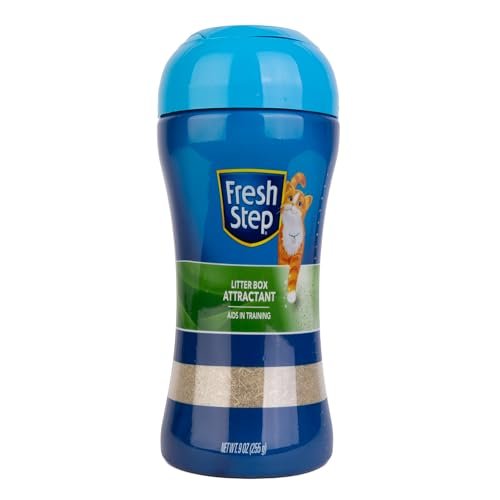
We use Fresh Step Litter Attractant when a cat starts avoiding the box, which can worsen urinary stress. The herbal formula draws cats back to the litter area, and the 9 oz shaker makes it easy to dose. It works with any litter type, so we can keep our preferred clumping or non-clumping base and still help our cat feel comfortable.
We’ve found it especially useful during retraining after a painful episode or after a litter swap. By increasing box visits, we see more consistent output, which helps us track clump size and frequency. That data is vital when we’re watching for signs of urinary blockage or dehydration, and it keeps us proactive.
Pros:
- Encourages box use
- Works with any litter – clay, crystal, or natural
- Easy to apply – simple shaker top
- Great for retraining – post-UTI or stress events
- Improves monitoring – more visits, clearer data
Cons:
- Scent sensitivity – some cats prefer a very light dusting
- Needs reapplication – best results with regular refresh
We start with a small sprinkle of the attractant and increase only if needed. Too much scent can turn a sensitive cat away, so less is more at first. We also follow the one box per cat plus one rule and keep boxes spotless. With more visits, we get a better read on intake and output, and our vet gets useful notes if we need help.
We’ve had wins with stressed rescues and seniors who hesitated to use the box after a painful UTI. Combined with hydration boosters and a quiet litter area, this powder helps rebuild positive habits. When cats go more often, we can spot smaller clumps or straining and step in faster. That monitoring is key in preventing escalation.
For homes with mixed litter preferences, this product keeps us flexible. We can use a low-dust clumping clay for clear clump tracking or switch to a collection litter when we need a sample, and still rely on the attractant. The 9 oz size lasts a while, and we store it near the litter for quick refresh after each full clean. It’s a simple tool that supports the whole urinary health plan.
Occult Blood Detect Litter Additive
We consider the Occult Blood Detect Litter Additive a smart early-warning tool. It works with most litter types and flags hidden blood in urine, a common sign of urinary irritation. We sprinkle it in and watch for color changes as we scoop, which makes daily checks fast and simple for busy households.
We’ve used it in short monitoring cycles when our cats are stressed, after diet changes, or when we see extra trips to the box. A color change is our cue to collect a sample with a non-absorbent kit and call the vet. It’s not a diagnosis, but it’s a clear, visual way to stay ahead of problems and keep our cats safe.
Pros:
- Early detection
- Works with most litters – versatile and easy
- Simple setup – sprinkle and observe
- Helps track trends – great for recurring issues
- Pairs with vet testing – guides next steps
Cons:
- Not a diagnostic test – use findings to prompt proper vet checks
- Possible false positives – follow up with a urine sample for clarity
We rotate this additive into the box for a week each month or during stressful times like moving or new pets. It gives us peace of mind to know we’re screening for hidden blood that we might miss by eye. If it flags, we switch to a collection litter and get a sample to our vet fast. That speed matters with urinary issues, where hours can count.
We’ve found it helpful in multi-cat homes too. By using it in a separate box and watching which cat visits, we can narrow down who needs support. We also keep notes on clump size, water intake, and appetite. Together, these data points help us and our vet spot patterns and make smart changes.
For the best results, we use a low-dust base and scoop daily so color cues are clear. We avoid scented litters during monitoring, as strong perfumes can mask subtle changes or deter sensitive cats. As part of a comprehensive plan with hydration, calm spaces, and vet guidance, this additive helps us act early and reduce risk of urinary blockage.
Fresh Step Litter Attractant
We’re including Fresh Step Litter Attractant again here as a stand-alone pick because it plays a special role in urinary care. Getting a cat back to the box means more predictable pees, which helps us catch early signs of trouble. The all-litter compatibility and easy shaker design make it a low-effort upgrade during any litter routine.
We’ve used it when switching to a collection litter or a new clumping formula, and it smooths the transition. By boosting box visits, we get better data on clump size and frequency, a key metric when watching for blockage. It’s a small step that supports the bigger picture of a healthy urinary routine.
Pros:
- Boosts litter compliance
- Versatile use – pair with any litter or additive
- Retraining aid – ideal after discomfort episodes
- Simple dosing – clean application with a shaker
- Supports monitoring – more trips, clearer trends
Cons:
- Needs regular refresh – best when reapplied after cleaning
- Some cats prefer milder scent – start light and adjust
We’ve learned to pair this with environmental tweaks: quiet location, uncovered boxes, and larger pans for comfort. Cats that feel safe are more likely to use the box, which gives us reliable urine output to track. This attractant helps rebuild that routine, especially after a painful episode where litter avoidance becomes a habit. Over a few days, we see confidence return.
It also works well in multi-cat setups where litter politics can create stress. We add the attractant to more than one box and watch which spots get used first. With higher box appeal, we get steady data that helps us spot dehydration or early inflammation. That’s when we pull in a blood-detecting additive or a collection kit and loop in our vet.
We’re fans of tools that make our routine more consistent, and this one does exactly that with very little effort. When paired with wet diets, fountains, and a regular scooping schedule, it supports better urinary health and peace of mind. It’s not a treatment, but it helps all the other steps work better together for our cats.
Frequently Asked Questions
What should we look for in litter when monitoring urinary blockage risks?
We look for clear clump visibility, low dust, and a texture our cats like so they use the box often. Good clumps help us track size and frequency, which can signal hydration and comfort. We also use additives that detect blood or swap in a collection litter when we need a sample. The best setup is the one your cat uses reliably and that lets you observe changes fast.
How do litter additives help with early detection?
Additives like a blood-detecting powder can flag hidden blood that we might miss by eye. We sprinkle it in and watch for color shifts as part of daily scooping. If we see a change, we collect a urine sample using non-absorbent beads and contact our vet. This quick loop helps us catch issues before they turn into emergencies.
When should we collect a urine sample at home?
We collect a sample when we see increased trips, small clumps, straining, vocalizing, or sudden changes in litter habits. Using a non-absorbent collection litter at home is less stressful than a clinic catch for many cats. We label the sample and follow our vet’s storage and timing advice. Early, clean samples improve test accuracy and speed up the right treatment plan.
Are supplements useful for preventing urinary issues?
Supplements like homeopathic drops or tiny pellets can support comfort and normal function as part of a vet-led plan. We use them along with hydration, stress reduction, and routine monitoring. They are not treatments for blockage, but they can help between checkups. Always ask your vet how a supplement fits your cat’s specific needs.
How do we maintain the litter box to support urinary health?
We keep boxes very clean, scoop at least once daily, and wash pans weekly to encourage frequent use. We also follow the one box per cat plus one guideline and place boxes in quiet spots. We rotate in a blood-detecting additive for a week each month to screen for changes. Consistent care makes it easier to spot problems early and act fast.
Conclusion
We’ve focused on tools that help us monitor, encourage box use, and act early for urinary health. From supportive drops and pellets to collection litter and blood-detect additives, there are practical options for many needs. These products complement vet care and help us stay proactive.
Our final advice is to combine hydration, stress reduction, clean boxes, and the right tools for your cat. Consider your cat’s habits, texture preferences, and history, then choose the mix that helps you track changes fast. When in doubt, loop in your vet early for the safest path forward.