

If your cat’s “food allergy” looks like itchy skin, barf-on-the-rug mornings, or constant ear gunk, the fix usually isn’t a miracle supplement. It’s the bowl. The tricky part is that allergy-friendly labels don’t always match how cats react at home, and the wrong protein can keep the cycle going.
I’m the label-reader on our review team: the one who checks ingredient panels, calls out vague “poultry by-product” wording, and pays attention to what triggers real flare-ups in real homes. Cat food for allergy-prone cats matters because small changes in protein source, digestibility, and additives can show up fast in coat quality, stool consistency, and scratching. For many households, there’s a second “allergy” in the room too: human reactions to cat dander, which makes allergen-reducing formulas a practical part of the plan.
How we judged allergy-friendly cat kibble
We evaluated these foods the way an allergy household actually uses them: reading the first five ingredients, checking whether the protein source is clear and consistent, and noting any built-in digestive helpers like probiotics or prebiotic fibers. Our team compared bag sizes and daily feeding practicality, then mapped each formula to common problem scenarios—skin itching, sensitive stomach patterns, and human dander reactions. We also looked for realistic timelines and claims that match how diet changes typically show up over a few weeks.
Purina Pro Plan LIVECLEAR Chicken & Rice 16 lb

Big-bag kibble can be a blessing or a mistake when allergies are involved, so we approached this one carefully. The 16 lb LIVECLEAR Chicken & Rice format is aimed at multi-cat homes or anyone tired of running out mid-transition. First impressions: it’s clearly positioned for households managing human cat allergies while still keeping protein high for adult cats. If you like predictable availability and a single, consistent diet, this bag size is the draw.
Pros
- Large 16 lb bag lasts longer
- Allergen-reducing approach targets Fel D1
- High protein supports lean muscle
- Chicken-forward flavor many cats accept
- Dry kibble is simple to portion
Cons
- Large bag needs good storage
- Not ideal if chicken triggers reactions
In day-to-day feeding, the biggest win here is consistency: fewer formula swaps and fewer frantic last-minute store runs. Because it’s dry, it works well with timed feeders and multi-cat free-feeding routines, but freshness matters—use an airtight bin if you’re not burning through the bag quickly. For cats with sensitive digestion, slow transitions still apply; even “gentle” kibble can cause soft stools if you rush the change.
Buy this if you want the LIVECLEAR concept in a cost-efficient, long-lasting bag, especially in a home where people react to cat dander and you need a routine you can stick to. Skip it if your cat has a known chicken sensitivity or if you prefer rotating proteins often; a 16 lb commitment is a lot when you’re still figuring out the true trigger.
Purina Pro Plan LIVECLEAR Chicken & Rice

Some foods target your cat’s itchiness; this one also targets your sneezes. Pro Plan LIVECLEAR Chicken & Rice is built around a specific idea: neutralize Fel D1 (the common allergen in cat saliva) using a key protein from eggs, which can reduce allergens in hair and dander over time. Our first take is that it’s a very focused formula—high protein, chicken first, and positioned for adult cats with owners who notice the dander problem daily.
Pros
- Reduces allergens in hair and dander
- Chicken first ingredient supports appetite
- High protein helps maintain muscle
- Live probiotics support digestion stability
- Works well in automatic feeders
Cons
- Not a true limited-ingredient diet
- Egg-based tech may not suit all
Used as an everyday kibble, it fits most normal routines: scoop, measure, and you’re done. The claim you’re banking on isn’t instant, so the practical approach is to keep everything else stable—same litter, same treats—while you transition and observe. The added probiotics are helpful if your cat tends toward loose stools during diet changes, but we still recommend a gradual switch to avoid a messy week.
This is a smart pick for households managing human cat allergies who still want a mainstream, high-protein chicken kibble. It’s also a decent “baseline” food if your cat isn’t highly reactive to many ingredients. Avoid it if you’re chasing a strict elimination-diet strategy for suspected food allergies; the formula isn’t built as a minimalist ingredient list.
Purina Pro Plan LIVECLEAR Salmon & Rice 7 lb
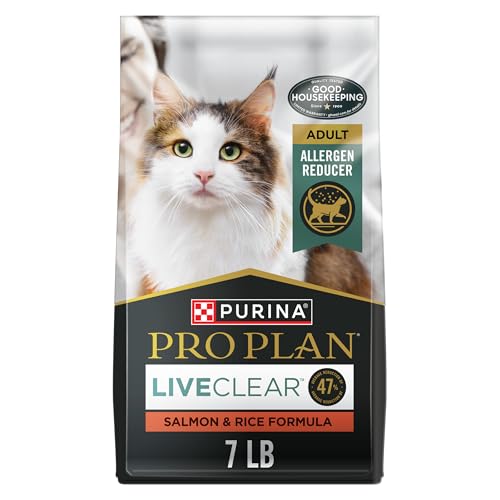
If chicken is your cat’s usual trigger—or you just want a different protein without giving up the LIVECLEAR approach—the Salmon & Rice version is the one we kept coming back to. It keeps the same allergen-reduction concept (Fel D1 neutralization with an egg-derived protein), but swaps the lead protein to salmon and leans into skin-and-coat support. First impressions: more “comfort food for the coat,” while still speaking to human allergy concerns.
Pros
- Salmon-first recipe supports skin
- Allergen reduction claim mirrors chicken version
- Live probiotics help digestive regularity
- 7 lb bag suits trial periods
- Often tempting for picky eaters
Cons
- Fish-based smell can be stronger
- Not a limited-ingredient elimination formula
In a real home, this one tends to shine when coat issues and dandruff are part of the picture—salmon-forward diets can be easier to live with if your cat’s skin is dry. The 7 lb size is practical for testing tolerance without committing to a huge bag, and it stores easily. As with any fish-based kibble, you may notice a stronger aroma around the bowl, especially in small spaces.
Choose this if you need the LIVECLEAR allergen-reduction angle but want to move away from chicken, or if your cat’s skin and coat need extra attention. It’s also a sensible “trial bag” size for cautious switchers. Pass if you’re doing a strict, vet-guided elimination diet, or if strong food odors bother your household.
Purina ONE LiveClear Allergen-Reducing Dry Cat Food

LiveClear is designed for households where people react to cat dander, not for cats with true food allergies. Its key differentiator is reducing the active allergen on cat hair and dander while still providing complete daily nutrition. As a chicken-based kibble, it can work for many cats but is not an elimination-diet option. Consider it a practical, food-first approach for allergy-sensitive homes when your cat tolerates chicken well.
Pros
- Reduces active allergen on hair and dander over time
- Real chicken first ingredient supports palatability
- No fillers; complete daily nutrition profile
- Omega-6s support skin and coat condition
- Digestible ingredients support nutrient absorption
Cons
- Not suitable for chicken-allergic cats
- Not a limited-ingredient elimination diet
Most cats transition easily if you mix it in gradually over a week. Expect any household allergy benefit to build with consistent feeding, not overnight. Kibble texture is standard and tends to be well accepted, though picky cats may need a slower switch. Monitor stool quality and itchiness, since a chicken-based formula can still trigger food reactions in sensitive cats. Pair with routine brushing and cleaning for best results.
Best for people with cat allergies who want a nutrition-complete dry food that may lower allergen exposure. Skip it if your cat’s allergy workup points to poultry sensitivity, or if you need a strict novel-protein or hydrolyzed elimination diet. Value is strongest when the goal is managing human symptoms while keeping a mainstream, widely available formula your cat will reliably eat.
Hill's Science Diet Sensitive Stomach and Skin Chicken
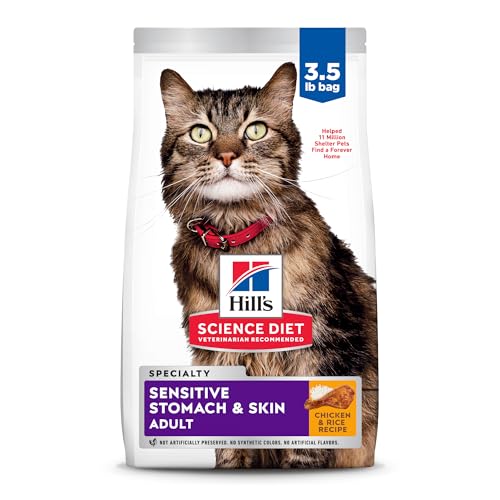
This formula targets digestive sensitivity and skin support rather than confirmed food allergy management. It uses highly digestible ingredients plus prebiotic fiber to support stool quality and a steadier gut routine, which can indirectly reduce skin flare-ups tied to GI upset. Because it is chicken-and-rice based, it is not ideal for cats suspected of poultry intolerance. Think of it as a step before prescription diets when symptoms are mild or intermittent.
Pros
- Highly digestible recipe supports sensitive stomachs
- Prebiotic fiber supports a balanced microbiome
- Omega-6 and vitamin E support coat health
- Often improves stool consistency with steady feeding
- Widely available and easy to transition onto
Cons
- Chicken-based; not ideal for poultry sensitivity
- Not a limited-ingredient allergy trial diet
In daily feeding, it tends to produce reliable, formed stools once your cat is fully transitioned. Many owners notice less haircoat dryness and reduced dandruff with consistent use, especially when hydration is adequate. If vomiting or itching persists, the issue may be a true food allergy requiring a novel or hydrolyzed protein. Measure portions carefully; calorie density can add weight in indoor cats.
Good fit for adult cats with mild digestive sensitivity, soft stools, or dry coat concerns when chicken is tolerated. It offers a balanced, predictable diet without jumping straight to prescription options. If your cat has recurring ear/skin issues, intense itching, or symptoms tied to specific proteins, you’ll likely get better answers from an elimination trial diet instead of a chicken-based sensitive formula.
Frequently Asked Questions
Will allergen-reducing cat food fix my cat’s food allergy?
Not usually. These formulas reduce allergens on hair and dander, not ingredient reactions. For true food allergies, use a vet-guided elimination diet and choose limited-ingredient or hydrolyzed options.
How do I choose between chicken and salmon formulas for allergies?
Pick the protein your cat has not reacted to. If past itching or vomiting followed chicken, choose salmon. If fish caused ear or skin flare-ups, choose chicken. Transition slowly over a week.
Is sensitive stomach and skin food the same as hypoallergenic food?
No. Sensitive formulas target digestion and skin support, but still use common proteins. Hypoallergenic diets typically use hydrolyzed proteins or novel ingredients to reduce immune-triggered reactions.
Our Recommendation
Best overall: Hill’s Science Diet Sensitive Stomach & Skin for broad digestive and skin support with consistent quality control. Best budget: Purina ONE LiveClear Chicken for a lower-cost way to reduce dander allergens. Choose Purina Pro Plan LiveClear Chicken or Salmon when allergen reduction is the priority and you want a higher-tier formula. If symptoms persist, confirm food allergy with a vet-directed elimination trial.