
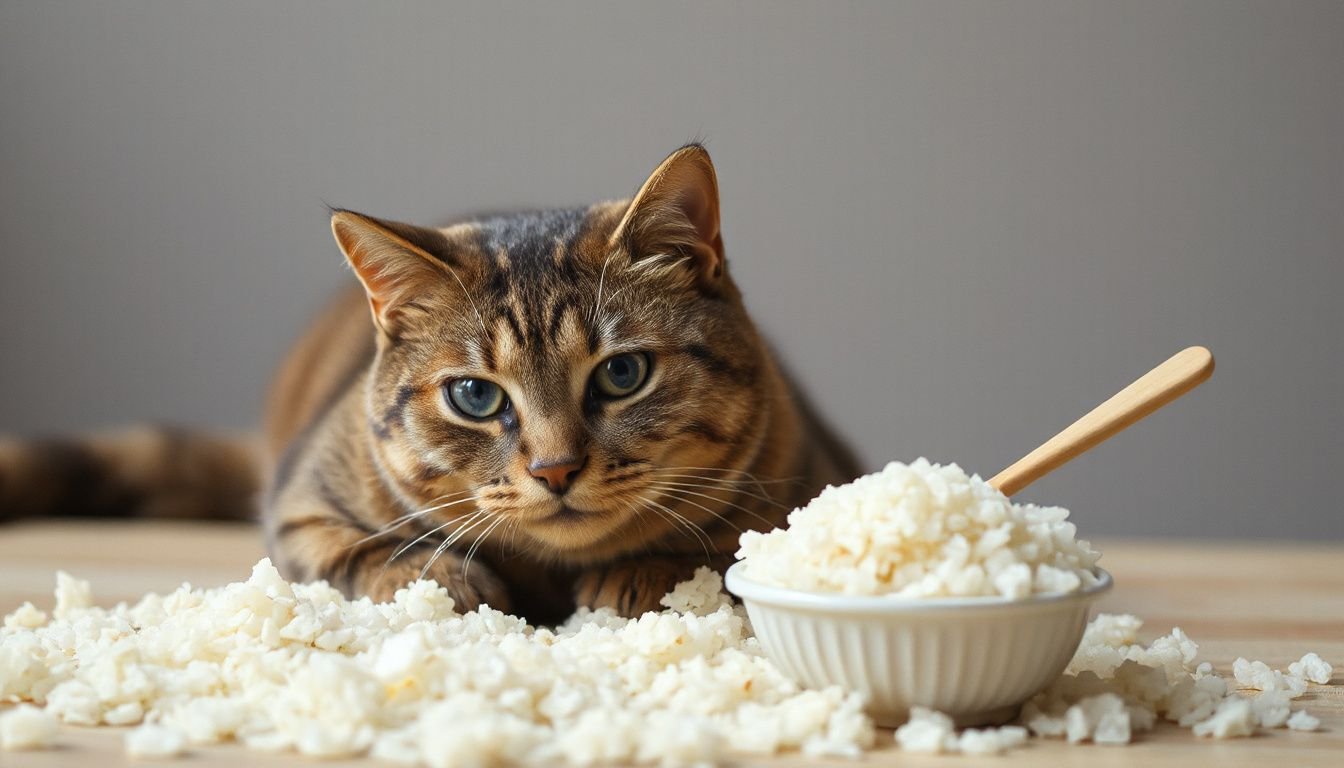
A bowl of plain boiled rice can look harmless, but for cats it can quietly shift nutrition in the wrong direction.
If you are asking can cats eat boiled rice every day, you are already thinking like a careful owner: you want a simple food that helps, not harms. Rice is common in home cooking, and it often shows up in “bland diet” advice for upset stomachs, so the daily-use question is reasonable.
But cats are obligate carnivores, and their daily needs are not flexible in the way many people assume. Small amounts of rice can be safe for many cats, yet “safe” is not the same as “appropriate as a daily habit.” The details depend on portion size, the rest of the diet, and why rice is being offered.
Can cats eat boiled rice every day without causing nutrient gaps?
For most healthy cats, boiled rice is not toxic, and tiny portions are usually tolerated. The real issue is nutritional displacement. When rice becomes a daily add-on, it can crowd out protein, taurine-rich animal ingredients, and essential fats that cats must get consistently.
Cats require high-quality animal protein to maintain lean muscle, support liver function, and keep skin and coat healthy. Rice is mostly carbohydrate and offers limited amino acids for cats. It also does not provide taurine, an essential nutrient for feline heart and eye health.
Here is what actually happens when rice becomes routine: a cat eats the rice first because it is easy to chew and mild, then leaves some of the meat-based food behind. Over weeks, calories may stay similar, but nutrient density drops.
| Diet factor | What rice changes | Why it matters for cats |
|---|---|---|
| Protein intake | – Replaces meat calories – Lowers amino acid density |
Protein supports muscle, immune function, and recovery. |
| Taurine and micronutrients | – Adds no taurine – Minimal vitamins compared with complete cat food |
Long-term gaps can affect vision and cardiac health. |
| Calorie control | – Adds “easy” calories – Can inflate daily intake quietly |
Weight gain raises diabetes and arthritis risk. |
| Stool quality | – Can firm stools in some cats – Can cause gas in others |
Digestive response varies by individual tolerance. |
A practical scenario: an indoor cat on a weight-control diet starts receiving two spoonfuls of rice nightly “as a treat.” The cat’s weight plateaus, then climbs, because the treat is consistent and calorie-dense relative to its benefit.
Actionable takeaway: if the main diet is a complete and balanced cat food, rice should stay occasional and small, not a daily staple.
When boiled rice can help (and when it backfires)
Boiled rice has a narrow, practical role: short-term support in a bland diet, usually paired with a lean protein, when a veterinarian recommends it. Some cats with mild, self-limiting diarrhea may pass firmer stools with a small amount of plain rice because it is low fiber and easy to digest.
But here is the non-obvious part: rice can also backfire when owners use it to “settle the stomach” without identifying the cause. Parasites, food intolerance, pancreatitis, inflammatory bowel disease, or toxin exposure will not resolve because rice is bland. It can delay proper diagnosis.
Another common pitfall is seasoning. Garlic, onion, butter, and salty broths are frequent in human rice dishes and are not cat-safe. Even “just a little” onion powder can be harmful over time.
- Use rice only if it is plain: no salt, oil, butter, onion, garlic, or spice blends.
- Keep it brief: think days, not weeks, unless your veterinarian has a specific plan.
- Pair with appropriate protein if using a bland diet: cooked chicken or a veterinary GI diet is typical.
- Stop and call your clinic if vomiting, lethargy, blood in stool, or dehydration appears.
Real-world example: a cat has loose stool after diet change. The owner feeds a bland mix for 48 hours, then transitions back to a complete diet slowly. The stool normalizes, and the owner avoids turning rice into a permanent crutch.
Actionable takeaway: rice is a tool for specific situations, not a daily “health food” for cats.
Portion size, frequency, and the safest way to serve boiled rice
If you still wonder, “can cats eat boiled rice every day,” portion control is the deciding factor. A teaspoon-sized taste is different from a bowl. Cats have small daily calorie budgets, especially indoor or senior cats, so minor extras add up fast.
Serve rice only when it is fully cooked, soft, and cooled to room temperature. Undercooked rice can be harder to digest. Sticky, clumped rice can also encourage fast eating, which may trigger regurgitation in cats that bolt food.
| Cat type | Safer frequency | Portion guidance | Pro tip |
|---|---|---|---|
| Healthy adult | Occasional | – 1–2 teaspoons mixed into food | Mix with wet food so meat remains the main driver of intake. |
| Overweight or diabetic risk | Rare | – Avoid routine carbs – Use low-cal treats instead |
Ask your vet for treat calories that fit the plan. |
| GI upset (vet-guided) | Short-term | – Small amount as part of bland diet | Reintroduce normal diet gradually over several days. |
| Kitten (growing) | Not ideal | – Prioritize complete kitten food | Growth needs leave little room for low-nutrient extras. |
A practical scenario: a senior cat with reduced appetite eats better when a teaspoon of rice is mixed into warmed wet food. The owner uses it twice a week, not daily, and monitors weight and stool.
Actionable takeaway: treat rice like a garnish. The core diet should still be complete, meat-forward, and portioned for your cat’s body condition.
Risks of daily rice: weight, diabetes, allergies, and “hidden” diet mistakes
Daily rice can create slow-moving problems that are easy to miss. Weight gain is the most common. Cats do not need carbohydrates in the same way omnivores do, and extra carbs can push total calories over maintenance without improving nutrition.
For cats predisposed to insulin resistance, frequent carb-heavy extras may complicate weight management. Rice is not “sugar,” but it is starch, and it can contribute to higher post-meal glucose compared with a protein-forward meal.
Food allergy to rice is less common than allergy to certain animal proteins, but it happens. More often, rice aggravates sensitive digestion through volume and frequency rather than true allergy. Watch for gas, loose stools, itching, or ear debris that worsens after diet changes.
| Risk area | What daily rice can lead to | What to do instead |
|---|---|---|
| Weight management | – Calorie creep – Reduced satiety from protein displacement |
– Use measured portions of complete food – Choose protein-based treats |
| Diabetes risk | – Harder glucose control in predisposed cats | – Vet-guided diet; prioritize high-protein wet food when appropriate |
| Nutrient dilution | – Less taurine and essential fats per calorie | – Keep extras under 10% of daily calories |
| Owner “recipe drift” | – Seasonings added over time – Rice replaces meals, not supplements them |
– Keep human food separate; use cat-safe toppers |
| Masking illness | – Temporary stool changes hide ongoing disease | – Seek evaluation if signs last over 24–48 hours |
Real-world example: a cat with recurring soft stool gets rice nightly. The stool firms up, but the cat slowly loses muscle. A vet visit later reveals the cat was eating less complete food, and an underlying GI issue needed treatment.
Actionable takeaway: if rice becomes “daily,” treat it as a red flag to review the full diet, body condition, and any chronic digestive signs with your veterinarian.
Frequently Asked Questions
Can cats eat boiled rice every day if it is mixed with wet food?
Mixing helps prevent picky cats from eating only rice, but daily use still dilutes nutrition. Keep rice minimal and occasional, and ensure most calories come from a complete and balanced wet food that meets feline nutrient requirements.
How much boiled rice is safe for a cat with diarrhea?
Small amounts work best: about 1–2 teaspoons mixed with a lean protein or a veterinary GI diet, short-term. If diarrhea lasts more than 24–48 hours, or there is vomiting or lethargy, contact a veterinarian promptly.
Is white rice better than brown rice for cats?
White rice is usually easier to digest because it has less fiber. Brown rice can cause more gas or loose stool in sensitive cats. Neither is nutritionally necessary, so choose based on tolerance and keep portions small.
Final Thoughts
The safest, most accurate answer to “can cats eat boiled rice every day” is that most cats can tolerate it, but daily feeding rarely makes nutritional sense. Cats thrive on diets where animal protein and essential nutrients stay consistent, and rice does not contribute meaningfully to that goal.
If you use rice, keep it plain, small, and purpose-driven, such as a short-term bland diet under veterinary guidance. Next step: review your cat’s body condition, stool quality, and primary food label, then ask your veterinarian how much “extra” food fits your cat’s specific plan.