
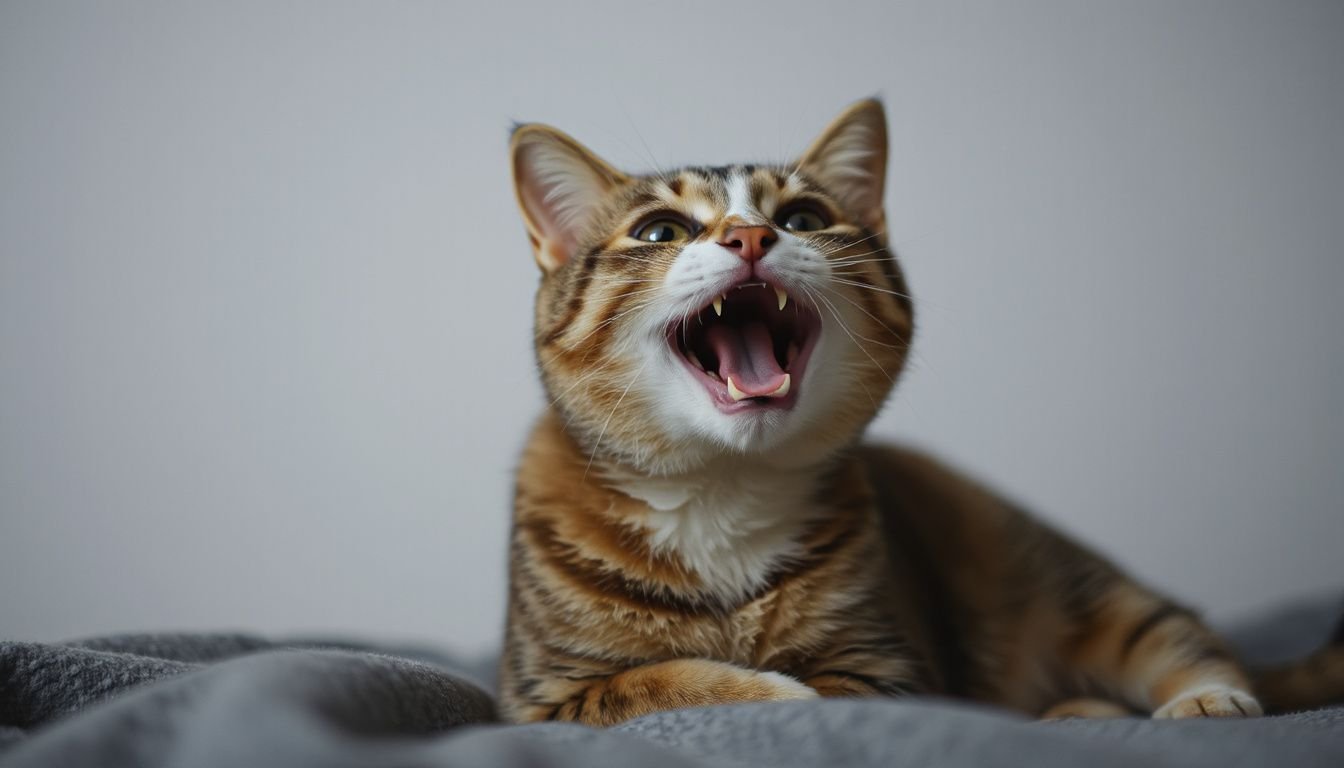
Your cat is not “being difficult” at 3 a.m.—it is running a playbook that has worked before.
If you are searching for how to stop cat from meowing at night naturally, you are probably dealing with broken sleep, anxious pacing, and a cat that seems most awake when the house is quiet. Night vocalization is common, but it is not random. It usually reflects a need being met (attention, food, stimulation) or a need being missed (security, routine, health support).
The good news is that most cases improve without punishment or harsh tools. The goal is behavior design: adjust daytime inputs, remove accidental rewards, and create a predictable night routine your cat can trust. When the plan matches feline biology, the noise often drops quickly—and stays down.
1) Identify the real reason behind night meowing (before you “train” anything)
Night meowing is a symptom, not a diagnosis. Some cats vocalize because they are under-stimulated and finally have energy when the home becomes calm. Others are asking for food, seeking a person, or responding to outdoor cats. A smaller but important group meows due to medical discomfort or age-related cognitive changes.
Start with pattern recognition. Note the time, location, and what happens next. If meowing reliably leads to you getting up, talking, petting, or feeding, the behavior is being reinforced. Cats learn fast. Faster than tired humans.
Health screening matters, especially if the behavior is new. Pain, hyperthyroidism, kidney disease, urinary discomfort, and hypertension can increase restlessness and vocalization. Senior cats may show feline cognitive dysfunction, which often looks like nighttime confusion and loud calling.
- Sudden onset: Treat as a health check trigger, not a “training problem.”
- Meowing plus litter box changes: Prioritize urinary or GI evaluation.
- Weight change, thirst, or ravenous appetite: Ask your veterinarian about bloodwork.
Real-world scenario: a cat that starts yowling at 2 a.m. after a move may be stress-vocalizing, while a 13-year-old that paces and cries near walls may be disoriented. Same sound. Different solution.
Expert insight: owners often mislabel attention-seeking as “anxiety.” Anxiety exists, but many cats are simply running a predictable reinforcement loop. Break the loop, and the “anxiety” often evaporates.
2) Build a daytime energy budget: the most natural way to reduce night noise
Cats are crepuscular, meaning they are naturally active at dawn and dusk. If your cat sleeps all day and then “hunts” at midnight, that is not misbehavior. It is a schedule mismatch. Fixing it requires shifting activity earlier, not just hoping the cat will “settle.”
Use structured play that ends with a clear “finish.” Wand toys, chase games, and short sprints mimic hunting. Aim for two to four play blocks daily, with the final session 60–90 minutes before your bedtime. Keep sessions short but intense.
- Play: 5–12 minutes, fast movement, let your cat “win” sometimes.
- Feed: a small meal after play to complete the hunt-eat-groom-sleep cycle.
- Downshift: quiet time, dim lights, minimal excitement.
Now, enrichment. Cats that lack daytime stimulation often create their own job at night: yelling. Rotate toys weekly, add window perches, and use puzzle feeders so meals require work. If you have one cat, consider increasing vertical territory (cat trees, shelves) to reduce boredom-driven vocalizing.
Practical example: a client-style routine that works is “two 8-minute wand sessions, one at lunch and one after dinner, followed by a tablespoon of wet food.” Within two weeks, the cat’s 4 a.m. meowing typically shortens or stops because the cat is no longer “saving energy” for nighttime.
Actionable takeaway: if you want how to stop cat from meowing at night naturally, treat daytime activity like a budget. Spend energy intentionally before bed.
3) Night routine engineering: food timing, environment, and the “no accidental rewards” rule
Once health and enrichment are addressed, the remaining driver is often reinforcement. If meowing produces any payoff—eye contact, conversation, footsteps, a snack—it can strengthen. Intermittent rewards are the strongest. That is why “sometimes I give in” makes the problem stubborn.
Set up a predictable night routine and protect it. Feed a measured evening meal after the final play session. Use an automatic feeder for a small pre-dawn portion if your cat is food-motivated and wakes you early. This shifts the cat’s focus away from you and toward a consistent, non-human cue.
| Night trigger | Natural adjustment | Why it works | Pro tip |
|---|---|---|---|
| Hunger at 3–5 a.m. | – Automatic feeder – Later dinner meal |
Removes you as the “food dispenser” | Start with tiny portions to avoid weight gain |
| Attention-seeking | – No talking or touching – Reward quiet in daytime |
Extinction of the reward loop | Use earplugs short-term to stay consistent |
| Outdoor cat agitation | – Close blinds at night – Block window access |
Reduces territorial arousal | Use frosted film on lower window panels |
| Loneliness or insecurity | – Warm bed near you – Familiar scent item |
Increases perceived safety | Consider a pheromone diffuser for 30 days |
| Noisy environment | – White noise – Consistent lighting |
Masks small sounds that trigger alertness | Soft nightlight can reduce startle-pacing |
Human example: if your cat screams at the bedroom door and you open it “just once,” the next night often escalates. If the door stays closed consistently and breakfast comes from an auto-feeder, the door loses its power.
Non-obvious insight: some cats do better with more access, not less. If a cat panics when separated, allowing bedroom access plus a defined sleep spot can reduce vocalization—provided you do not reward meowing with play.
4) Natural behavior shaping: what to do in the moment, and how long change really takes
When meowing starts at night, your response must be boring and consistent. No lectures. No bargaining. No “shushing” conversations. If you must get up, do it silently and for a neutral task, not for the cat. The standard is simple: meowing never produces the outcome the cat wants.
At the same time, reinforce the behavior you want—quiet. During the day and evening, “catch” calm moments and reward them with attention, treats, or a short play burst. This is differential reinforcement. It is more effective than punishment and aligns with low-stress handling principles used in modern veterinary behavior practice.
- Night rule: ignore meowing; do not feed, pet, or talk.
- Day rule: reward quiet, relaxed behavior on your schedule.
- Consistency window: expect 7–21 days for meaningful change; longer if you previously “gave in.”
What actually happens when you implement this: many cats increase volume for a few nights (an extinction burst). Owners interpret this as “it is getting worse,” then they reward the louder meow by getting up. That single moment can lock the behavior in. Stay consistent, and the burst usually fades.
Practical scenario: an apartment cat meows at 1 a.m. because it learned that the owner tosses treats to “buy silence.” Switching to an evening puzzle feeder, adding a bedtime play-feed routine, and removing all night treats typically reduces meowing within two weeks.
Actionable takeaway: how to stop cat from meowing at night naturally often comes down to two levers—reduce nighttime motivation (food, boredom, triggers) and remove nighttime rewards (your reaction).
Frequently Asked Questions
Should I ignore my cat meowing at night or check on them?
If the behavior is new, paired with litter box changes, appetite shifts, or pacing, check in and schedule a veterinary visit. If health is cleared and needs are met, ignoring night meowing is usually necessary to stop reinforcement.
Will feeding my cat right before bed stop night meowing?
It can help, especially when combined with active play beforehand. For early-morning wake-ups, an automatic feeder often works better than a larger bedtime meal because it removes you from the food routine and keeps timing consistent.
Are natural calming aids like pheromone diffusers worth trying?
They can be useful for stress-driven vocalization, multi-cat tension, or post-move adjustment. Use them alongside routine, enrichment, and consistent responses. They are rarely a standalone fix, but they can reduce arousal enough for training to stick.
Final Thoughts
Night meowing improves when you treat it like a system: health first, then energy and enrichment, then a night routine that does not accidentally pay the behavior. The most reliable plans look boring on paper. That is why they work in real homes.
Pick two changes you can sustain this week—typically a play-feed bedtime routine and a no-reward response at night—then track results for 14 days. If the pattern is sudden, intense, or paired with other symptoms, make the next step a veterinary check to rule out medical causes.