

An African Grey doesn’t just sit in a cage—it lives in it, argues with it, and tries to outsmart it. If the bars flex, the locks are flimsy, or the tray is a pain, you’ll feel it every single day. The right cage makes cleaning faster, behavior calmer, and your bird safer.
I review bird cages like a fussy parrot caretaker: I assume the bird will chew everything, test every latch, and fling food like it’s a hobby. African Greys are strong, clever, and sensitive. They notice wobbly stands, hate cramped corners, and will absolutely exploit a sloppy door gap. Your cage choice impacts noise, mess, stress levels, and how easy it is to build a daily routine.
This category matters because it’s not only about size. Bar spacing has to match a Grey’s head and beak strength. The frame needs stiffness so the cage doesn’t rack when rolled. The layout should support natural movement: climbing, stretching wings, and stepping between perches without awkward hops. If the tray and grate system is annoying, you’ll clean less often—and that’s when odors, bacteria, and frustration creep in. A good cage is a long-term piece of furniture for both of you.
How I Judged These African Grey Cages
I compared bar spacing, interior height, and door geometry to see how safely a Grey can climb and turn. I checked frame thickness, weld quality cues, and powder-coat coverage for rust resistance and beak wear. I also weighed daily chores: tray glide, grate fit, seed-guard usefulness, feeder durability, and caster stability when rolling over thresholds.
VEVOR Bird Cage, 32.7 x 31.1 x 82.7 inch, Open Flat Top, Wrought Iron Bird Flight Cage with Perches, Slide-Out Tray, Plastic Feeders, for Cockatiel, Monk Parakeet, Amazon Parrot, African

If you want a cage that feels more like a “bird corner” than a bird box, this tall VEVOR flight-style setup gets your attention fast. The footprint is roomy, and the height gives an African Grey that vertical climbing space they naturally use. I also like the open flat-top concept for supervised hangouts—less awkward than balancing a separate play stand across the room.
Pros
- Tall profile encourages climbing and movement
- 0.6in spacing suits many Greys safely
- Open top adds supervised play area
- Seed guard helps control floor mess
- Slide-out tray speeds up cleaning
- Casters make room-to-room moves easy
Cons
- Plastic feeders may get chewed quickly
- Large size needs real floor space
- More height can mean more splatter
- Open-top use requires supervision
In day-to-day use, the horizontal wires matter: a Grey can climb without relying only on perches, which reduces boredom pacing. The powder-coated wrought iron should handle humidity better than bare metal, though I’d still wipe water spots near bowls. The slide-out tray is the feature you’ll love most on messy-food days; pull, dump, wipe, done. Rolling it on casters is handy, but expect to steady the cage when crossing thick rugs.
Buy this if your Grey spends real time in-cage and you want a tall, roomy setup with an open-top option for interaction. It’s a good match for households that can dedicate a corner and keep a cleaning routine. Skip it if your bird destroys plastic accessories fast or if you need a compact cage that disappears visually in a tight apartment.
Yaheetech 63-Inch Wrought Iron Rolling Large Bird Cage for African Grey Small Quaker Amazon Parrots Canary Bird Flight Cage

This Yaheetech 63-inch cage is the kind of practical, no-drama housing I recommend when you want a solid daily driver without fancy extras. The overall shape is straightforward, and the included rolling stand makes it easier to rotate the cage for light, drafts, or cleaning access. First impression: it’s built to be used, not babied, and the layout stays familiar for most parrot owners.
Pros
- Wrought iron build feels sturdy for daily use
- Rolling stand helps reposition without heavy lifting
- Slide-out tray simplifies routine cleaning
- Bottom grate keeps feet off waste
- Finish resists moisture and oxidation
Cons
- 3/8in spacing may feel tight
- Narrower width limits wing stretch
- Less interior height than tall cages
Because the cage isn’t overly wide, you’ll need to plan perch placement carefully so your Grey can turn and step without tail rubbing bars. The grate-and-tray combo is a real quality-of-life feature: it reduces tracking mess and makes quick cleanups realistic on busy mornings. Casters help, but I’d still lock the wheels or brace the stand during door-opening sessions—smart birds lean and pull with surprising force.
This one fits the owner who values easy cleaning, a stable stand, and a sensible footprint over maximum flight space. It can work for an African Grey that gets regular out-of-cage time and uses the cage mainly for meals, sleep, and calm downtime. Avoid it if your priority is wide, full-wing stretching inside the cage.
Yaheetech 52-inch Wrought Steel Standing Large Flight King Bird Cage for Cockatiels African Grey Quaker Amazon Sun Parakeets Green Cheek Conures Pigeons Parrot Bird Cage Birdcage with Stand
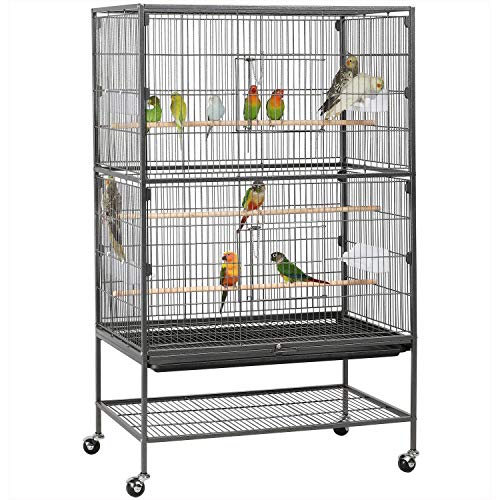
Not everyone wants a towering cage. This 52-inch Yaheetech “Flight King” style aims at that middle ground: decent width, manageable height, and a layout that’s easy to reach into without a step stool. The 5/8-inch bar spacing is the spec I checked first for Greys, and it lands in a range many owners consider workable for larger parrots when the build feels rigid.
Pros
- 5/8in spacing suits many large parrots
- Two large doors improve access
- Pull-out tray cleans up fast
- Powder-coated finish wipes down easily
- Rolling stand helps move for cleaning
Cons
- Shorter height limits vertical play
- May need extra perches included separately
- Casters can wobble on thick carpet
In a real home, the two big doors make a bigger difference than you’d think—you can swap bowls, rotate toys, and scrub corners without scraping your knuckles. The cage height keeps things reachable, which encourages better cleaning habits. With a Grey, I’d add a thicker natural wood perch and place it high enough for sleeping comfort. The powder coat should handle daily wipe-downs, but expect toy hooks to scratch over time.
Choose this cage if you want easy access, sensible proportions, and bar spacing that matches many African Grey setups. It’s a strong pick for owners who clean often and like rearranging enrichment. Pass if your bird prefers tall climbing routes or if you want a huge “roomy mansion” feel rather than a compact, efficient home base.
Sinopet 69-inch Large Bird Cages for Parrots

This tall, wheeled cage targets African Grey owners wanting a full starter setup: multiple stainless feeding cups, two trays, seed skirts, and a top play area. The carbon-steel frame and rust-resistant finish aim for everyday durability, while the moderate bar spacing suits medium-large parrots. It works best as a primary cage when paired with ample out-of-cage time, and as a practical choice for homes prioritizing cleaning convenience and mobility.
Pros
- Includes stainless cups and multiple accessories
- Seed skirts reduce floor mess significantly
- Locking casters make repositioning easy
- Rust-resistant coated steel frame
- Top play area encourages supervised activity
Cons
- Bar spacing may be wide for smaller birds
- Interior height limits full flight exercise
- Coating can chip if chewed aggressively
In daily use, the rolling base helps with vacuuming and light changes, and the seed skirts catch most hulls before they hit the floor. Multiple cups simplify fresh food rotation and water changes. The top play area is useful for short sessions, but you will still rely on external stands for longer enrichment. Cleaning is straightforward with the trays, though corners need regular wipe-down to prevent buildup.
Best for African Grey, Quaker, cockatiel, and similar parrots needing a tall, easy-clean cage with included hardware. Choose it if you value mobility, mess control, and a ready-to-use bundle. Skip it if your bird is a strong chewer of coatings or you want a wider interior for more climbing and wing-stretching inside the cage.
Yaheetech 69-Inch Extra Large Bird Cage Metal Parrot Cage
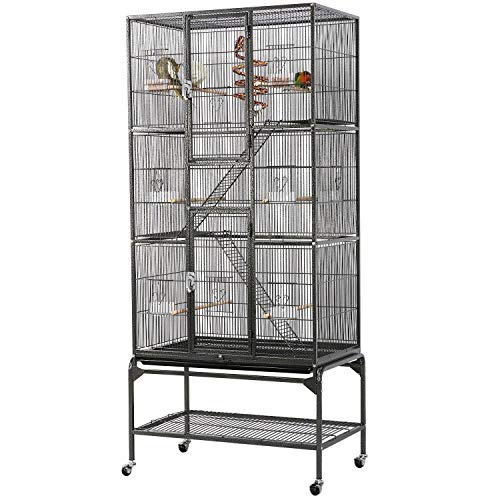
This multi-tier cage is positioned for households keeping several smaller birds or one medium-large parrot, using ladders and platforms to increase usable vertical space. The large front doors and crescent locks focus on access and security, important for clever parrots. Its footprint is relatively narrow compared with tall cages, so it fits tighter rooms while still offering enrichment potential through perches and toys placed across levels.
Pros
- Multiple tiers add usable climbing space
- Secure crescent locks resist smart birds
- Large doors improve access for cleaning
- Rust-resistant finish handles routine wiping
- Narrow footprint fits smaller rooms
Cons
- Depth may feel tight for larger parrots
- Platforms can trap droppings without liners
- May need perch upgrades for foot health
Day to day, the tiered layout keeps active birds moving between levels, especially when you place food, water, and toys strategically. The big doors make it easier to change bowls and remove soiled liners without chasing the bird. Cleaning is manageable, but the shelves and ladder areas need frequent attention to prevent waste buildup. Many owners will replace stock perches with varied diameters for better grip and comfort.
Good for owners wanting a space-efficient cage for one African Grey or multiple smaller birds, especially if you plan a toy-rich setup that uses the vertical levels. It offers solid security and access for routine care. Not ideal if you want a deep, open interior for larger parrots to fully spread wings, or if you prefer a simpler single-level layout.
Frequently Asked Questions
What bar spacing is safe for an African Grey?
Aim for about 5/8 to 3/4 inch spacing. Wider gaps increase head-trap risk; tighter spacing can limit visibility and climbing. Prioritize sturdy, chew-resistant bars and secure door locks.
How big should a cage be for an African Grey?
Bigger is better, but prioritize usable interior width and depth. Ensure full wing extension without hitting bars, plus room for multiple perches and toys. A larger rolling cage helps cleaning and repositioning.
What cage features matter most for daily care?
Look for a slide-out tray, grate, large doors, casters, and metal feeders. Avoid flimsy latches and weak welds. A flat-top or play-top is optional; interior space and durability matter more.
Verdict
Best overall: VEVOR Bird Cage 32.7 x 31.1 x 82.7 inch. It offers strong size, height, and practical cleaning features for an African Grey. Best budget: Yaheetech 52-inch standing flight cage, a solid value for tighter spaces and lighter setups. Choose Yaheetech 69-inch extra large if you want more room without the VEVOR footprint, and Sinopet 69-inch if you prefer an included cover and a taller profile.