

A parakeet cage can look roomy in a listing, then feel like a cramped elevator once you add perches, bowls, and a swing. The wrong bar spacing invites escapes. The wrong tray turns cleaning into a daily grudge. So what actually makes a cage feel safe, livable, and easy to maintain?
Persona: The No-Nonsense Bird Room Keeper. I judge cages the way I judge a toolbox: if it gets in your way, you’ll stop using it. With parakeets, that matters more than most people realize, because their health depends on routine. A cage that’s annoying to clean or hard to reach usually stays dirtier, and birds pick up on it fast. Stress can show up as nippy behavior, scruffy feathers, and restless pacing.
This category matters because parakeets live in their cage, not just sleep in it. They climb, chew, hop, nap, and watch the room like tiny security guards. A good cage gives them safe spacing, predictable doors, and enough interior “real estate” to create zones: food, play, rest, and a little flight path. You also need a cage that works for you: smooth rolling wheels, feeder doors that don’t spook them, and trays that don’t scatter husks everywhere. Get those basics right and everything gets easier—taming, training, and day-to-day care.
What We Checked Before Calling It “Best”
I compared bar spacing, real usable interior space (once perches are added), door access for hands and toys, and how well the tray and grate contain seed mess. I also evaluated mobility (casters and overall stability), feeder-door convenience, and common “escape-artist” weak spots like flimsy latches and oversized gaps around panels.
VISCOO Upgraded Encrypted 46-Inch Bird Cage
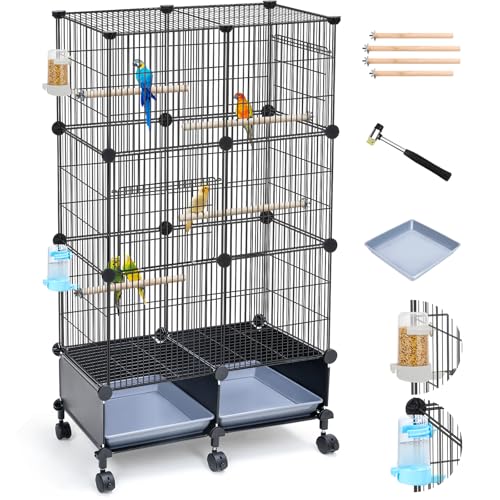
If your parakeet acts like every door is a jailbreak opportunity, the “encrypted” tighter-build vibe here is the first thing you’ll notice. The cage is tall and narrow, with a simple footprint that fits apartments and bird corners. I like that it ships with basics you’ll actually use—wood perches, a feeder, and an external water bottle—so setup doesn’t feel bare on day one.
Pros
- Tall profile gives good climbing space
- Slide-out tray speeds up daily cleaning
- External feeder reduces hand-scaring
- Locking casters make moving safer
- Wood perches feel grippy, not slick
Cons
- Narrow width limits true flight
- 1/2-inch spacing can be risky
- Included accessories may feel basic
In a real room, the 24×12 inch base tucks neatly beside a desk or shelf, and the height gives your bird that “high ground” comfort. The slide-out tray is the main quality-of-life win: you can swap papers, wipe, and slide it back without dismantling the cage. The external bottle and feeder let you refill with less commotion, which helps skittish parakeets stay calmer during routine care.
Buy this if you need a tall, space-saving cage and you value easy cleaning over wide flight room. It’s a practical pick for one parakeet or a calm pair that spends time out of cage daily. Avoid it if you have a tiny bird that could challenge wider bar spacing, or if you want a wide “flight” layout inside the cage.
BestPet 64 inch Wrought Iron Bird Cage with Play Open Top
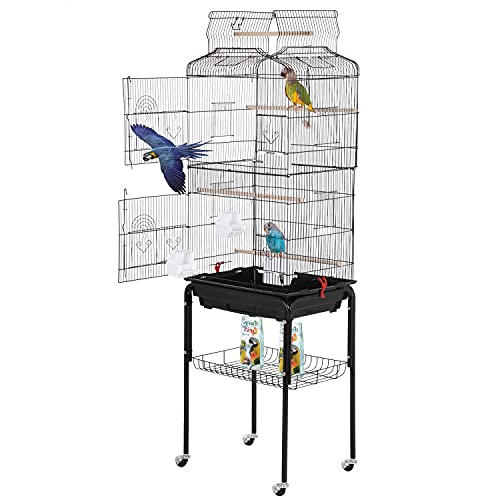
An open-top cage can be a blessing or a headache, and this one leans toward “useful” thanks to the locking top and perch. The overall build reads like classic wrought-iron styling: tall, stand-mounted, and meant to sit as a piece of furniture in the room. I also appreciate the small access doors on the front—less of that awkward full-door swing when you just need to swap a bowl.
Pros
- Open-top adds supervised hangout space
- 0.4-inch spacing suits most parakeets
- Front small doors simplify refills
- Rolling casters help relocate easily
- Welded steel feels sturdier than thin wire
Cons
- Open-top requires active supervision
- Tall stand can wobble if bumped
- Finish may scratch with heavy cleaning
With the roof open, you can turn the top perch into a routine “step-up” station, which is handy for training and calmer handling. Inside the cage, the narrow doors are convenient for quick tasks, but you’ll still want a wide main door for toy placement and deep scrubs. On wheels, it’s easy to roll away from windows or vents, though I’d lock the casters before any out-of-cage time.
This fits owners who enjoy interacting with their parakeet and want a safe, controlled open-top option for short sessions. It’s also a good match if you move the cage around for light, cleaning, or room rearranging. Skip it if your home has kids or pets that might bump a tall stand, or if you prefer a fully enclosed setup.
Yaheetech 39-inch Roof Top Large Flight Parrot Bird Cage with Toys
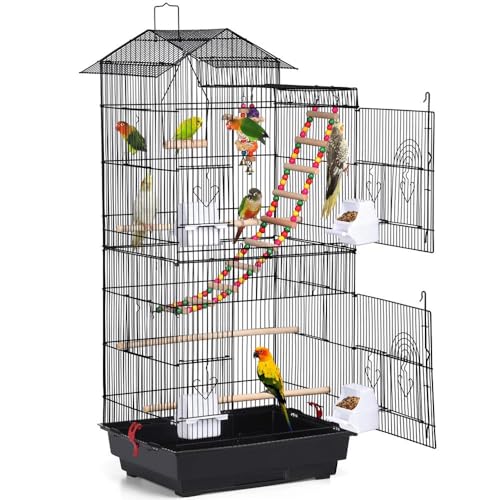
For a starter-friendly cage that doesn’t feel like a bare metal box, this Yaheetech model comes out of the gate with “livable” extras: a swing and ladder, plus wide swing doors that make your hands less clumsy inside. The size is modest, but the interior is easy to organize. If your main priority is access and cleaning without fuss, this one makes a strong first impression.
Pros
- Wide swing doors improve access
- Slide-out tray keeps mess manageable
- Mesh grate keeps feet cleaner
- Includes swing and ladder enrichment
- 0.4-inch spacing helps prevent escapes
Cons
- Shorter height limits climbing variety
- Included toys may be flimsy
- Not ideal for multiple birds
In day-to-day use, the detachable grate is the hero feature: your parakeet stays off droppings, and cleanup feels quicker and less gross. The two big doors help with rearranging perches so you can create a clear hop path from perch to feeder. Because it’s only 18×14 inches, you’ll want to keep accessories minimal—too many toys quickly steal the little flight lane the cage does have.
Choose this if you want an easy-maintenance cage for a single parakeet, especially in a smaller room. It’s also a sensible pick for first-time bird keepers who want good access for training and cleaning. Avoid it if you’re housing a pair long-term without frequent out-of-cage time, or if you want a tall, roomy “bird room” centerpiece.
Yaheetech Bird Cage 64'' Medium Small Parrot Parakeet Bird Cages with Detachable Rolling Stand

This tall, rolling Yaheetech cage targets parakeet owners who want more vertical room without stepping into oversized, heavy flight cages. The 0.4 inch bar spacing suits budgies and similar small birds, while multiple doors and included feeders simplify daily routines. A detachable stand adds flexibility for cleaning and placement. It works best as a primary cage for one to two parakeets with regular out-of-cage time.
Pros
- 0.4 inch spacing suits parakeets and small finches
- Rolling stand makes repositioning simple
- Multiple doors improve access for cleaning and handling
- Slide-out tray speeds up daily wipe-downs
- Includes perches, feeders, and a swing to start
- Detachable stand offers flexible placement options
Cons
- Included perches may need upgrading for foot health
- Tall profile can wobble if not leveled
- Plastic feeders can be chewed by persistent birds
In day-to-day use, the casters make it easy to move for vacuuming and light changes, which helps reduce dander buildup. The side doors are convenient for swapping bowls without spooking a skittish budgie. The slide-out tray handles daily mess well, but lining it saves time. Expect to replace stock perches with natural wood and add toys to use the vertical space effectively.
Best for budget-minded parakeet owners wanting a taller cage with easy mobility and decent access. It is a practical home setup for one bird, or two if they get along and spend time outside the cage daily. If you prioritize premium hardware, thicker metal, or chew-proof accessories, you may prefer a heavier cage, but this delivers solid function for the price tier.
Yaheetech 52-inch Wrought Steel Standing Large Flight King Bird Cage with Stand
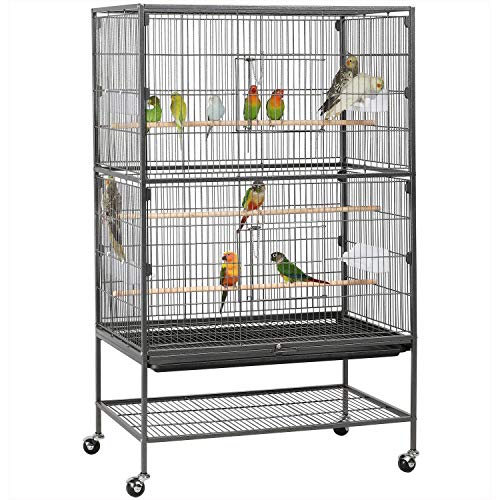
This wider, flight-style Yaheetech cage is positioned for owners who want more horizontal room for active parakeets and small-to-medium birds. The powder-coated metal build aims at durability, while large front doors and a pull-out tray focus on maintenance efficiency. Bar spacing is larger than typical budgie cages, so it is better for larger parakeets or supervised budgies. It suits multi-bird setups where space matters most.
Pros
- Wide footprint supports hopping and short flights
- Powder-coated metal feels sturdy for daily use
- Large doors simplify cleaning and toy changes
- Pull-out tray and grate reduce mess contact
- Rolling stand helps move a heavier cage
Cons
- 5/8 inch spacing may be risky for small budgies
- Takes more floor space than tall cages
- Heavier to carry up stairs or relocate
The extra width makes enrichment easier because you can hang toys without crowding perches. Cleaning is straightforward through the large doors, and the grate helps keep feet out of debris. On hard floors, the casters roll smoothly, but turning in tight spaces takes planning. For budgies, verify head clearance at the bars and consider acrylic guards if you see climbing attempts near openings.
A strong pick for owners keeping larger parakeets or mixed small-to-medium birds who need more horizontal room. For standard budgies, it can work only if you are confident the spacing is safe for your bird and you monitor behavior. Value is best when you prioritize space and access over compact size. Apartment users may find the footprint too large.
VEVOR 30-inch Flight Bird Cage, Stackable Bird Cage with Handle and Perches

This VEVOR cage is designed as a modular, stackable option for small birds, useful for households that may add a second cage later or need separation for training or quarantine. The 0.4 inch spacing is appropriate for parakeets, and the compact flight footprint fits tighter rooms. It leans more utilitarian than furniture-like, with side handles for moving and a simple tray system. Best as a practical everyday cage or secondary setup.
Pros
- 0.4 inch spacing fits parakeets and lovebirds
- Stackable design supports multi-cage setups
- Side handles help lift and reposition safely
- Feeding doors allow quick bowl access
- Bottom tray slides out for fast cleaning
Cons
- 30-inch height limits vertical climbing space
- Carbon steel needs careful drying after washing
- May feel plain without added perches and toys
For daily care, the tray and grate combo makes quick cleanups manageable, especially with paper liners. The feeding doors reduce escape risk during refills, which is helpful for fast birds. The cage is easy to move short distances using the handles, but it is not as convenient as a wheeled stand for frequent room-to-room moves. Add natural perches and foraging toys to prevent boredom in the smaller volume.
Ideal for parakeet owners who need a compact cage, a travel-friendly backup, or a stackable system for multiple birds in separate enclosures. Good value if you prioritize practical cleaning and safe bar spacing over tall play space. If your budgie spends most of the day inside the cage, a larger flight cage may be a better primary home.
Yaheetech 64-inch Play Open Top Medium Small Bird Cage with Detachable Rolling Stand

This Yaheetech open-top cage is positioned for parakeet owners who want a primary cage that also supports supervised out-of-cage perching. The tighter 3/8 inch spacing is budgie-friendly, and the tall frame provides climbing room. Multiple feeding doors and a slide-out tray target easier daily upkeep. The detachable rolling stand helps with placement and cleaning. It is best for birds that enjoy interaction and structured playtime outside the cage.
Pros
- 3/8 inch spacing is safer for budgies
- Open-top perch supports supervised play sessions
- Multiple feeding doors simplify refills
- Tall layout offers good climbing and perching variety
- Rolling stand makes cleaning around the cage easier
- Detachable cage separates for deeper cleaning
Cons
- Open-top requires supervision to prevent escapes
- Stock perches may need replacement for comfort
- Tall cage can be awkward in low spaces
In routine use, the open-top feature is most valuable for short, supervised sessions where your bird can perch above the cage while you swap toys or refresh food. The feeding doors reduce the need to open the main door, lowering escape chances. Cleaning is manageable with the tray, but expect seed scatter around the base. Adding a seed skirt or floor mat helps keep the area tidy.
Best for hands-on parakeet owners who schedule daily interaction and want an open-top option without buying a separate play stand. Strong choice for budgies due to tighter bar spacing and good height. If you cannot supervise open-top time or prefer a fully enclosed, escape-resistant setup, choose a standard closed-top flight cage instead. Overall value is high for interactive households.
Frequently Asked Questions
What bar spacing is safest for a parakeet cage?
Use 1/2 inch spacing or smaller to prevent head trapping and escapes. Wider spacing can be unsafe for budgies, especially juveniles. Prioritize horizontal bars for climbing and multiple door latches.
How big should a parakeet cage be for daily living?
Bigger is better, but prioritize flight length over height. A roomy flight cage with wide interior space supports exercise, enrichment, and multiple perches. Add out-of-cage time daily for best welfare.
Which cage features matter most for easy cleaning?
Look for a slide-out tray, grate, and wide access doors. Smooth powder-coated metal wipes easier than textured finishes. A rolling stand helps move the cage for floor cleaning and sunlight rotation.
Our Recommendation
Best overall: Yaheetech Bird Cage 64'' with Detachable Rolling Stand for its strong value, roomy footprint, and practical cleaning access. Best budget: VEVOR 30-inch Flight Bird Cage for a compact, affordable setup with portability. If you want maximum height and play-top time, choose a 64-inch play open-top model. For more interior flight space at mid-height, the Yaheetech 39-inch roof-top flight cage is a balanced pick.