

When a cat’s kidneys start failing, the food bowl turns into a daily negotiation: you need low-phosphorus support, more hydration, and enough calories to keep weight on—yet your cat might refuse anything that smells “medicinal.” The best renal options don’t just meet a label claim; they get eaten, consistently, without upsetting sensitive stomachs.
Persona: The Practical Rescue Foster. After years of fostering seniors and hospice cats, we’ve learned kidney diets live or die by two things: hydration and compliance. Renal-friendly formulas can help reduce the workload on damaged kidneys, but only if your cat actually eats enough of it, day after day. That’s why this category matters so much—small differences in texture, aroma, and appetite support can change your entire routine, from pill time to litter box checks.
How we narrowed it down in real bowls
We evaluated these renal-support options the way most households use them: by rotating meals, watching acceptance over several feedings, and checking how easy it is to keep portions consistent. Our team compared wet versus dry practicality, smell and texture (picky-eater factor), and how each formula supports typical kidney-care priorities like controlled minerals, steady calories, and hydration. We also considered pack sizes, storage, and how realistic it feels to feed long-term.
Hill's Prescription Diet k/d Chicken & Vegetable Stew Wet

Some renal foods feel like “clinical nutrition” in a can; this one tries hard to feel like dinner. Hill’s k/d Chicken & Vegetable Stew comes as bite-sized chunks in gravy, which matters when you’re coaxing a cat with a fading appetite. Our first impression was that it’s positioned for cats that need kidney support but still want a recognizable stew texture. The 2.9 oz cans also help with portion control when you’re splitting meals.
Pros
- Stew texture often tempts picky cats
- Gravy adds extra moisture per meal
- ActivBiome+ supports gut-kidney link
- Portion-friendly 2.9 oz cans
- Amino acids help maintain muscle
Cons
- Prescription access may be required
- Chunks may not suit tooth pain
In daily use, the biggest win is hydration: the gravy makes it easier to bump fluid intake without forcing extra water bowls. The chunk-in-gravy format also mixes well with warm water if you need an even softer consistency. We found it practical for frequent small meals—open, serve, refrigerate, repeat—though you’ll want a covered container to keep fridge odors down. For cats that lick gravy first, stirring helps keep bites balanced.
Buy this if your cat prefers wet food with texture and you’re prioritizing hydration alongside kidney support. It’s also a smart pick for caregivers who like smaller cans to reduce waste. Skip it if your cat needs a smooth pâté for dental pain or tends to eat only gravy and leave chunks behind; in that case, a finer texture may reduce frustrating “half-eaten” bowls.
Forza10 Vet-Formulated Renal Wet Lamb 32-Pack

If your cat turns their nose up at chicken-based renal diets, the Forza10 lamb angle can be a welcome change. This is a vet-formulated renal wet food made in Italy, packed in 3.5 oz cans with a savory profile that’s meant to be easy to serve as a main meal or mixed into other foods. Our first thought: it reads like a more ingredient-story-driven renal option, with hydrolyzed and potato proteins aimed at controlled phosphorus needs.
Pros
- Lamb flavor offers useful rotation option
- Hydrolyzed protein can be gentler
- Controlled phosphorus supports renal goals
- 32-pack reduces reordering stress
- Wet format supports better hydration
Cons
- 3.5 oz cans may waste food
- Some cats dislike hydrolyzed aroma
The pâté-style wet texture tends to be easy to portion and mash, which helps when you need to hide supplements or mix in extra water. With 3.5 oz cans, many cats with kidney failure won’t finish a can in one sitting, so planning matters: split into two meals and refrigerate the rest promptly. We also like it as a “bridge food” when transitioning off non-renal diets—mixing small amounts is straightforward without crumbling kibble.
This fits households that want a wet renal diet with an alternative protein flavor and the convenience of a larger case. It’s also a good choice if you’re managing a sensitive stomach and want to try hydrolyzed protein. Avoid it if you hate storing opened cans or your cat only eats fresh-opened food; the larger can size can become expensive waste in those situations.
Hill's Prescription Diet k/d Kidney Care Chicken Dry

Dry renal food can be controversial, but it’s often the difference between “my cat eats” and “my cat won’t.” Hill’s k/d Chicken Dry leans into that reality with an Enhanced Appetite Trigger (E.A.T) approach, aiming to drive better intake when interest in food drops. In hand, the kibble feels like a classic veterinary-diet formula: practical, shelf-stable, and easy to measure. It’s positioned as a daily staple or a topper base.
Pros
- E.A.T support can boost intake
- Easy to measure consistent portions
- Long shelf life, less waste
- ActivBiome+ supports digestive balance
- Convenient for multi-cat households
Cons
- Lower moisture than wet food
- Not ideal for dental issues
For real-life feeding, the biggest advantage is convenience: you can leave a measured portion for grazers and track what disappears. That said, kidney cats benefit from moisture, so we treated this as part of a plan—pairing with wet meals or adding water where tolerated. The kibble format is also handy for treat-like hand feeding during low-appetite days, though cats with mouth pain may struggle with crunch.
Choose this if your cat refuses most wet renal foods, if you need an easy calorie backstop, or if your schedule makes frequent wet servings tough. It also works well as a small topper to encourage eating. Avoid it as the only food if your cat is chronically dehydrated or has significant dental disease; a wetter texture usually makes life easier for both of you.
Pet Wellbeing Kidney Support Gold for Cats

This is a vet-formulated herbal liquid designed to complement a renal care plan, not replace a kidney diet. It targets common quality-of-life issues seen with kidney stress, including appetite dips, hydration challenges, and low energy. The alcohol-free tincture format helps with dosing precision, especially for cats that refuse pills. Best viewed as supportive care alongside lab monitoring, hydration strategy, and a phosphorus-controlled food guided by your veterinarian.
Pros
- Liquid dosing is precise and easy to adjust
- Alcohol-free; generally gentler for sensitive cats
- May support hydration, appetite, and daily comfort
- Useful alongside prescription renal diets
- Bacon flavor can improve compliance
Cons
- Not a complete food; requires diet and veterinary plan
- Some cats still resist liquid administration
In day-to-day use, this works best when introduced gradually and paired with consistent routines: same dosing times, steady water access, and renal-friendly meals. Caregivers often find the liquid easier than tablets, especially when mixed into a small amount of strong-smelling wet food. Track drinking, litter box output, appetite, and body weight to judge response. If vomiting or refusal occurs, reduce dose and consult your veterinarian.
Good fit for caregivers seeking a non-pill supportive option for cats with kidney challenges, especially when appetite and hydration are inconsistent. It offers potential comfort benefits but should not be treated as a substitute for phosphorus control, adequate calories, or medical management. Value is strongest for cats that tolerate liquids and for owners who can monitor trends and coordinate with their veterinarian for ongoing adjustments.
Forza10 Vet-Formulated Renal Wet Cat Food
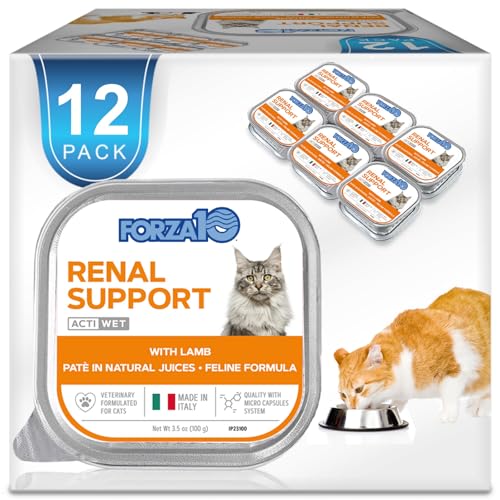
This wet renal-support formula is positioned as a daily diet option for adult cats needing kidney-friendly nutrition. Wet texture helps increase water intake, while controlled mineral balance and adapted protein aim to reduce renal workload. The lamb flavor can help maintain calorie intake when appetite is selective, a common challenge with kidney issues. It fits best as the primary food when a cat accepts it consistently and your veterinarian agrees the nutrient profile matches your cat’s stage.
Pros
- Wet format supports better daily hydration
- Renal-focused mineral balance for kidney support
- Palatable lamb flavor can help maintain intake
- Single-serve cans simplify portion control
- Useful for mixing with medications or supplements
Cons
- Some cats may dislike the specific texture or aroma
- Not ideal if your cat needs a different protein
As an everyday food, success depends on steady acceptance and careful transitions. Mix increasing amounts over several meals to reduce stomach upset and food refusal. Because kidney cats can be picky, warming the food slightly and offering smaller, frequent portions can improve intake. Monitor stool quality and appetite over the first week, and keep fresh water available. If your cat loses weight or refuses meals, reassess promptly with your veterinarian.
Best for cats that need a kidney-support wet diet and do better with higher moisture meals. It’s a practical option for owners who want portion-controlled cans and a renal-oriented formula without complicated prep. Value is strongest when your cat eats it reliably, since consistent calorie intake matters as much as nutrient targets. If your cat has multiple sensitivities, confirm ingredient fit with your veterinarian.
Frequently Asked Questions
Do I need a prescription to buy renal cat food?
Prescription renal diets are intended for diagnosed kidney disease and should be used under veterinary guidance. They restrict phosphorus and use controlled protein and sodium. Non-prescription supplements do not replace renal diets.
Wet or dry food: which is better for kidney failure?
Wet renal food usually helps hydration and urine output, which supports kidney comfort. Dry renal food can work if your cat drinks well. Many cats do best on mostly wet with dry as needed.
How do I switch to a kidney diet without upsetting my cat?
Transition slowly by mixing increasing amounts over several days. Warm the food, offer small frequent meals, and prioritize steady intake. If appetite drops, contact your vet promptly to avoid weight loss.
Our Recommendation
Best overall: Hill's Prescription Diet k/d Kidney Care Chicken & Vegetable Stew wet. It reliably targets kidney needs while supporting hydration and palatability. Best budget: Forza10 Renal Wet 12-pack, a lower-commitment pack with renal-focused formulation. Choose Hill's k/d dry if your cat prefers kibble and drinks well. Consider Pet Wellbeing Kidney Support Gold only as a vet-approved add-on, not a diet replacement.