
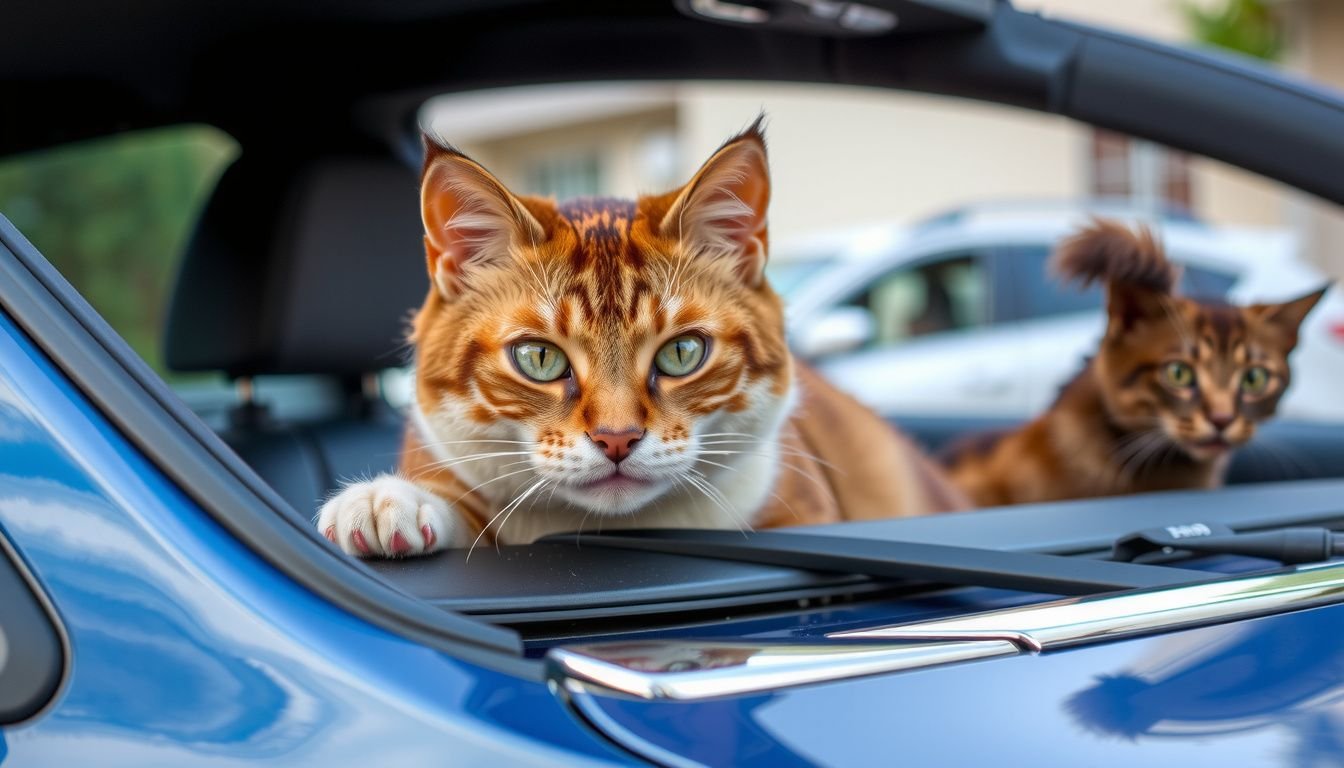
Ever wondered what are cats on cars and why this quirky sight is so common? Whether you’re a car owner curious about feline behavior or a cat lover concerned about their safety, understanding this phenomenon is both practical and surprisingly fascinating. As someone experienced in animal behavior and vehicle maintenance, I’ll help you make sense of why cats are drawn to vehicles, what risks are involved for both sides, and how you can keep your car—and neighborhood cats—safe.
Stick around for proven tips, smart prevention, and answers to your most pressing questions.
- What: Cats resting, sleeping, or walking on vehicles
- Common Risks: Scratches, fur, paw prints, blocked ventilation
- Why: Warmth, height, safety, curiosity
- Prevent: Covers, repellents, routine checks
- Safe Deterrents: Humane, non-toxic, motion-activated options
What Does ‘Cats on Cars’ Really Mean?
When you hear the phrase ‘cats on cars,’ it’s not just a fun internet meme—it’s a real-world issue. This term refers to the tendency of domestic or stray cats to perch, sleep, or roam atop vehicles parked outdoors. You might spot a feline lounging on your hood, curled up on the roof, or even nestled near the tires.
For many, it’s a charming visual, but for car owners, it can be a source of frustration due to the potential for scratches, paw prints, and minor damages. Understanding this behavior helps you address both the practical and humane aspects of sharing your neighborhood with local cats.
Why Do Cats Like to Sit or Sleep on Cars?
Cats are drawn to vehicles for several reasons. The most obvious is warmth—car hoods retain heat long after the engine’s turned off, offering a cozy spot, especially in cooler months. Cars also provide elevation, which gives cats a better vantage point to survey their territory and avoid ground-level dangers like dogs or traffic.
The smooth, flat surfaces of a car’s roof or hood make for a comfortable nap. Look, if you’ve ever come outside on a chilly morning and found a cat basking on your car, you’ve seen this behavior in action. Curiosity and a sense of security are powerful motivators for our feline friends.
Potential Risks Cats Pose to Your Vehicle
While cats rarely cause serious damage, their presence isn’t risk-free. Here’s what you should watch for:
- Scratches: Claws can leave marks on paint, especially when cats jump up or slide down.
- Paw Prints & Fur: Cats shed fur and leave dirt or oily prints, which can be tough to clean.
- Blocked Vents: Cats may crawl into engine bays for warmth, risking fur and debris clogging essential components.
- Alarm Triggers: Sensitive car alarms may go off with the weight or movement of a cat.
While these issues are mostly cosmetic, repeated cat visits can add up to annoying cleanup or minor repairs over time.
How Cats Can Be Affected by Resting on Cars
It’s not just your vehicle at risk—cats face hazards too. Engine compartments can be dangerous; a cat hiding for warmth may be injured if the car starts unexpectedly. Hot surfaces, like metal hoods in the summer, can burn sensitive paws.
Chemicals or residues on the car may irritate their skin or be ingested during grooming. In one real-world case, a neighborhood cat was found limping after being startled and falling from a high SUV roof. Always bang or tap your hood before starting the engine to give any hidden cat a chance to escape safely.
Tips to Prevent Cats from Getting on Your Car
If you want to keep cats off your vehicle, try these proven strategies:
- Use a Car Cover: Shields paint and discourages cats from finding a comfy spot.
- Park in a Garage: Whenever possible, indoor parking is the best solution.
- Relocate: If possible, avoid parking under trees or near known cat hangouts.
- Routine Checks: Always inspect around tires and under the hood before starting up, especially in winter.
Consistency is key—cats are creatures of habit and will move on if your car becomes less appealing.
Safe and Humane Ways to Deter Cats
It’s important to keep deterrents humane and cat-friendly. Here are effective options:
- Motion-Activated Sprinklers: Startles cats gently without harm.
- Citrus or Herbal Repellents: Cats dislike citrus scents—use sprays or sachets near your car.
- Ultrasonic Devices: These emit sounds only cats can hear, encouraging them to stay away.
- Double-Sided Tape: Apply on car hoods (if practical); cats dislike sticky surfaces.
Always avoid toxic chemicals or physical traps, which can harm both cats and other wildlife.
When to Seek Help for Persistent Cat Issues
If neighborhood cats keep targeting your car despite your best efforts, it may be time for outside help. Contact local animal control or a humane society for advice on managing stray or feral cats. Community cat programs can provide resources for trap-neuter-return (TNR), reducing roaming and territorial marking.
If a cat appears injured or is frequently hiding in dangerous spots near your vehicle, seek veterinary or rescue assistance. Addressing persistent issues early helps protect both your property and the well-being of local cats.
Quick Answers
Do cats damage car paint?
Yes, cats can scratch car paint with their claws, especially when jumping up or down. Regular cleaning and a car cover help minimize visible scratches.
Why do cats prefer certain cars?
Cats often choose cars that are warm, parked in sunny spots, or located in quieter areas. The location and temperature matter more than the make or model.
Are cat deterrents safe for pets?
Most motion-based and scent deterrents are safe if used as directed. Always avoid toxic chemicals or anything that could harm animals or children.
What should I do if a cat is stuck in my engine bay?
Don’t start your car. Tap the hood, wait a few minutes, and check inside. If the cat won’t leave, contact animal control or a local rescue for help.
Wrapping Up
So, what are cats on cars? It’s a common sight rooted in feline instincts for warmth, safety, and curiosity. While the risks to vehicles and cats are real, most issues have practical, humane solutions.
By understanding why cats behave this way and following safe deterrent methods, you can protect your car and look out for neighborhood cats. Stay observant, use preventative measures, and don’t hesitate to seek expert help for persistent problems. With the right approach, you’ll strike a balance between caring for your vehicle and respecting local wildlife.