
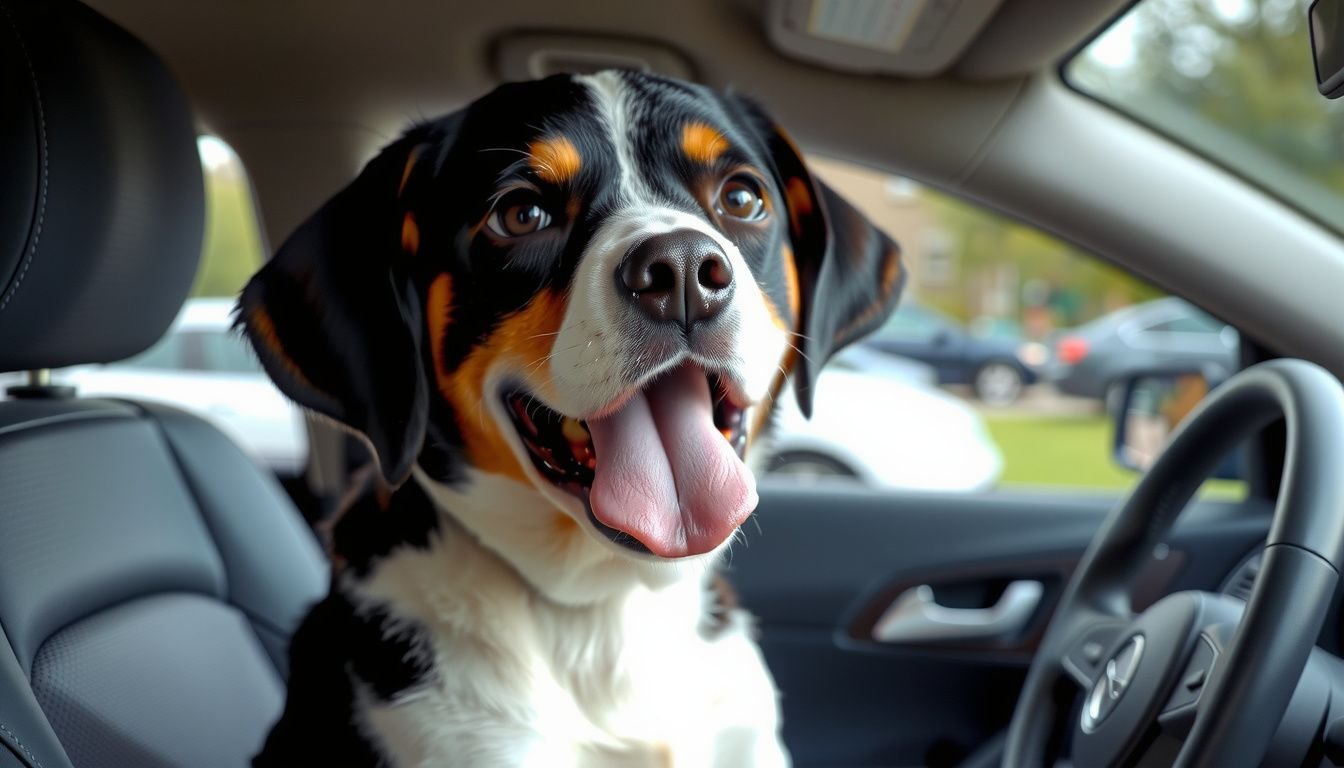
Ever typed “why is my dog panting in the car” into Google while glancing nervously at your backseat? I have. That rapid breathing made me wonder if my dog was hot, anxious, or if something was really wrong.
I dug deep into expert advice and, through trial and error, figured out what my dog needed and when to worry. If you’ve ever been confused—or even a little panicked—about heavy panting during car rides, you’re not alone. Today, I’ll walk you through what I learned, what signs to watch for, and how I keep my pup happier on the road.
Let’s get your dog (and you) feeling a lot more relaxed about car trips.
- Panting is a normal dog behavior, especially after play or in warm conditions.
- Heat, stress, excitement, and medical issues can all cause panting.
- Watch for excessive panting, drooling, vomiting, or lethargy—these are red flags.
- Never leave your dog alone in a parked car, even for a short time.
Why I Noticed My Dog Panting in the Car
The first time I really paid attention to my dog panting in the car, we were on a routine trip to the park. The windows were cracked, but he was still breathing quickly and his tongue was flopping out. I’d seen him pant after playing fetch, but this seemed different—almost desperate.
I couldn’t ignore it. That moment made me realize there’s more to panting than just being a little warm. From then on, I started looking for patterns: Was it only on hot days?
Was it worse when we drove somewhere unfamiliar? It’s wild how a little observation can change how you care for your furry best friend.
Normal vs. Excessive Panting: What I Learned
After talking to my vet, I picked up on some key differences. Normal panting is usually slow and steady, often after exercise or during excitement. It stops once your dog cools down or calms down.
Excessive panting looks frantic or labored—sometimes paired with drooling, whining, or restlessness. If your dog can’t settle, keeps panting after the car stops, or seems distressed, that’s a warning sign. I learned that knowing my dog’s baseline breathing helped me spot when something was off.
Trust your gut: if it looks “off,” it probably is.
The Role of Heat and Temperature Inside My Car
I underestimated how quickly the inside of my car heats up. Even with the AC running, the sun beating through the windows made a big difference. Dogs can’t sweat like we do—they rely on panting to cool down.
A quick tip: I now always check the seat with my hand. If it’s hot for me, it’s worse for my dog. On warm days, I run the AC for a few minutes before we even get in.
I also pack fresh water and a travel bowl, and I never leave him alone in the car. Ever.
How Anxiety and Stress Affect My Dog on Car Rides
My dog’s body language told me a lot. When he’s anxious, he paces, whines, and pants even with the windows down. Sometimes, it’s the destination—like the vet—that triggers his nerves.
One thing that helped was bringing a favorite toy or blanket from home. I also tried short, positive trips (like to a dog-friendly café) to associate the car with good things. Over time, his panting eased up on most rides.
If your dog shakes, hides, or can’t settle in the car, anxiety might be the real culprit.
Car Sickness: My Experience and Signs to Watch For
Not all panting is emotional or heat-related—sometimes, it’s flat-out motion sickness. My dog would drool, lick his lips, and sometimes even vomit after a longer drive. The panting started before the mess, almost as a warning.
Some dogs outgrow it, but mine needed a little help. I fed him a light meal a few hours before the trip and made sure he faced forward (using a secured harness). If it got really bad, my vet recommended safe anti-nausea meds.
If your dog pants and drools in the car, car sickness might be the answer.
Excitement vs. Distress: Telling the Difference
It took me a while to spot the difference between “I’m so excited to go to the park!” and genuine distress. Excited panting usually comes with wagging tails, bright eyes, and maybe a playful bark. Distress looks different—tense muscles, tucked tail, and maybe trying to hide.
Here’s a quick table I made to help myself, and maybe you’ll find it useful too:
| Excitement | Distress |
|---|---|
| Wagging tail, alert | Tucked tail, tense body |
| Bright eyes, playful | Wide eyes, lip licking |
| Panting slows after a few minutes | Panting stays fast or worsens |
Health Issues That Made Me Concerned
Sometimes, panting is a sign of a medical problem. My vet explained that conditions like heart disease, respiratory issues, or pain can all cause heavy breathing. If your dog is older, overweight, or has a known health condition, don’t brush off weird panting.
I learned to look for extra symptoms: coughing, blue gums, weakness, or collapse. These are emergencies. I keep my vet’s number saved just in case, and you should too.
Trust yourself—if something feels wrong, get it checked out.
How I Help My Dog Feel More Comfortable in the Car
I built a little routine that helps my dog relax. Here’s what works for us:
- Shade and ventilation: Car shades and cracked windows (safely!) keep things cool.
- Secure spot: A comfy harness and familiar blanket help him feel safe.
- Water breaks: I offer water before, during, and after the trip.
- Positive associations: Treats and praise for calm behavior.
On a recent road trip, I used all these tricks, and he actually napped while we drove. Total game changer.
When I Decided to Call the Vet for Help
There were a couple of times when my dog’s panting didn’t stop after the car ride. He seemed exhausted, and his tongue looked darker than usual. That’s when I called the vet, who told me I made the right move.
Here are the signs I watch for now:
- Panting that doesn’t stop when the car does
- Collapse, weakness, or confusion
- Blue or pale gums
- Vomiting or diarrhea
If any of these pop up, don’t wait—call your vet. It’s always better to be safe than sorry.
What This Means for You
Learning why your dog pants in the car can make every drive safer and more enjoyable—for both of you. Watch for patterns, compare normal vs. excessive panting, and trust your instincts if something seems wrong.
Keep your car cool, make rides positive, and never hesitate to call the vet if you’re worried. With a little prep and awareness, you can turn stressful car rides into smooth adventures. Your dog will thank you every time you buckle up.
- 60-Second Recap:
- Panting in the car can be normal, but watch for signs of distress or illness.
- Heat, anxiety, excitement, sickness, and health issues may cause panting.
- Know your dog’s baseline and look for changes.
- Always provide shade, water, and a comfy spot for your dog.
- Call the vet if panting is excessive, doesn’t stop, or is paired with other symptoms.