
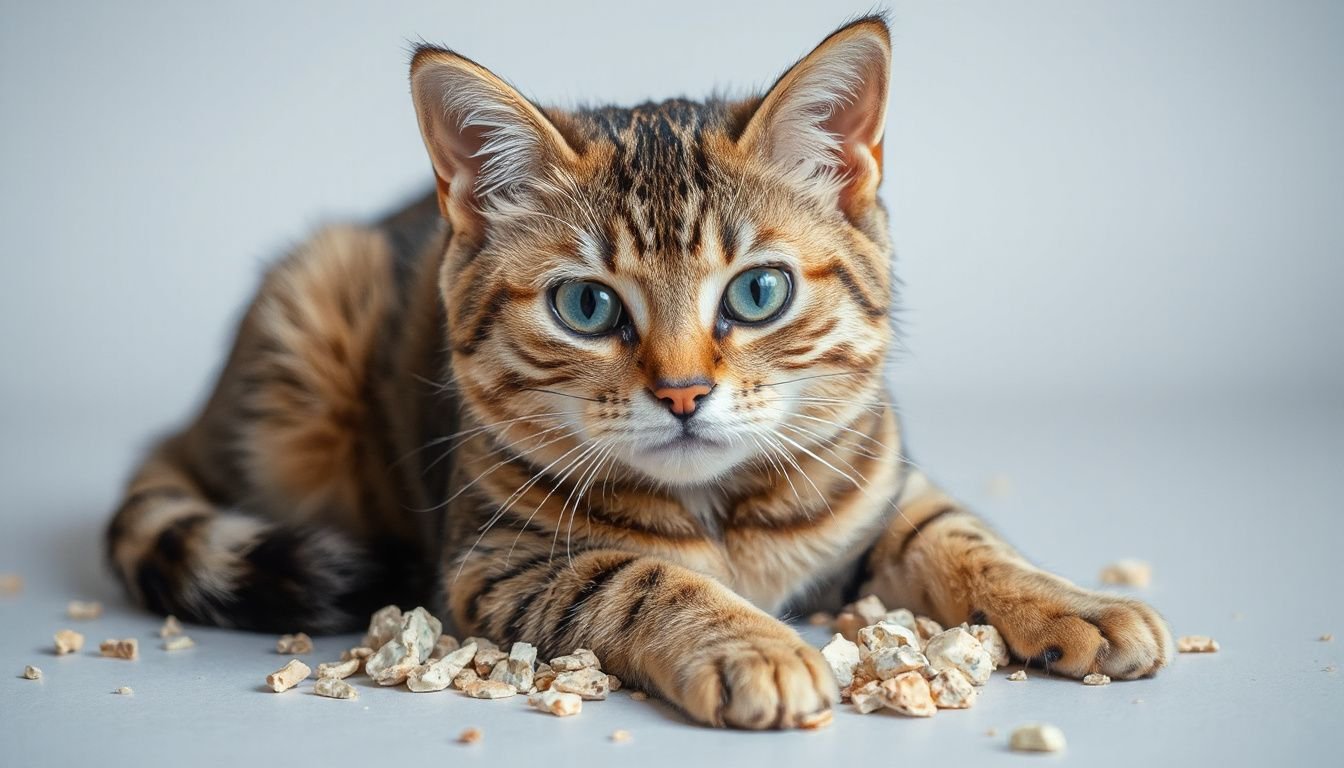
Best low tracking cat litter isn’t a luxury—it’s the difference between clean floors and daily sweeping. Look, cats don’t track litter because they’re “messy.” They track it because the granules cling to paws, stick to fur, and scatter when they launch out of the box like it’s a race. The right litter fixes most of that without changing your cat’s habits.
Low tracking comes down to particle shape, weight, and how the litter handles moisture. Larger, denser granules fall off paws faster. Pellets don’t migrate as easily. Some clays are engineered to reduce crumble and dust, which also cuts the “trail” across tile and hardwood.
Real-world example: a two-cat home with one high-energy kitten can go from vacuuming twice a day to twice a week by switching from fine clay to a heavier clumping formula, pairing it with a top-entry box, and placing a textured mat that actually grabs granules. Small changes. Big payoff.
This guide breaks down what matters, which products consistently keep floors cleaner, and the setup tweaks that stop tracking at the source.
Buying Guide: Key Decision Factors
Low tracking starts with physics. Heavier particles drop off paws faster, while ultra-fine grains behave like sand—easy to carry, easy to scatter, hard to control. Your goal is a litter that balances paw comfort, clumping strength, and minimal crumble.
First decision: material type. Clay clumping litters can be excellent if the granules are larger and low-dust. Pellet litters (wood or paper) track less because pieces are bigger, but they don’t clump the same way unless they’re designed for it. Silica crystals can be low tracking too, though some cats dislike the texture.
- Granule size and shape: Larger granules and pellets reduce “paw hitchhikers.”
- Dust level: Less dust means less residue on paws and less mess around the box.
- Clumping performance: Strong clumps prevent wet crumble, which is a major tracking culprit.
- Odor control method: Activated carbon, baking soda, or natural absorption—pick what works for your home.
- Cat preference: Sensitive paws often reject sharp crystals or very hard pellets.
Second decision: your home setup. Tracking is always worse with open boxes, high-traffic placement, and smooth flooring. A low tracking litter can’t fight a bad environment alone. But a smart pairing—top-entry or high-sided box plus a textured mat—can cut tracking dramatically.
Third decision: maintenance reality. If you scoop once daily, choose a litter with strong clumps and low crumble. If you scoop twice daily, you can prioritize tracking reduction even more aggressively. Either way, avoid overfilling the box; deep litter invites digging, kicking, and scatter.
Bottom line: choose a heavier, low-dust litter with stable clumps, then reinforce it with a setup that forces paws to “wipe” before your cat hits the floor.
Best Low Tracking Cat Litter Reviews: Top Picks for Clean Floors
These picks focus on what actually reduces tracking: particle weight, low dust, and minimal crumble. Each option fits a different household—multi-cat, sensitive paws, budget-focused, or odor-first.
Dr. Elsey’s Ultra Premium Clumping Cat Litter
Dr. Elsey’s Ultra uses heavier granules and a low-dust formula to reduce the fine “sand trail” common with cheaper clays. Clumps form tight and lift cleanly, which keeps wet bits from breaking into trackable crumbs. It’s a strong all-around choice for most cats and most boxes.
- Pros: Low dust, firm clumps, noticeably reduced tracking versus fine clay
- Cons: Still clay (some tracking remains), can be heavy to carry
Best For: Multi-cat homes that need strong clumping
Arm & Hammer Cloud Control Platinum Clumping Litter
Cloud Control targets dust first, and that matters because dust coats paws and spreads beyond the box. The granules are engineered to reduce airborne mess while maintaining reliable clumps. Odor control is aggressive, making it a smart pick for apartments and smaller spaces.
- Pros: Very low dust, strong odor control, consistent clumping
- Cons: Premium price, scent may bother sensitive cats
Best For: Small homes where dust and odor are the main problem
Fresh Step Clean Paws (Low Tracking Clumping Litter)
Fresh Step Clean Paws is built specifically to reduce tracking with larger granules and a formula that resists crumble. That “resists crumble” part is the win—less breakage means fewer tiny pieces to cling to paws. It’s a practical, widely available upgrade from standard clay.
- Pros: Noticeably lower tracking, easy to find, good clump stability
- Cons: Some dust remains, fragrance may be strong for some cats
Best For: Busy households that want a simple, store-available fix
ökocat Less Mess Wood Clumping Litter (Mini Pellets)
ökocat Less Mess uses wood mini pellets designed to clump, which is the key difference versus traditional pine pellets that mostly break down. Pellets track less because they’re bigger and don’t cling like sand. It’s also a strong choice for people who want a plant-based option without giving up scoopability.
- Pros: Very low tracking, plant-based, lighter dust footprint
- Cons: Transition period for some cats, clumps can be softer than clay
Best For: Eco-focused homes that still want clumping performance
| Product | Tracking Control | Dust | Odor Control |
|---|---|---|---|
| Dr. Elsey’s Ultra | High | Low | High |
| Arm & Hammer Cloud Control | High | Very Low | Very High |
| Fresh Step Clean Paws | High | Medium-Low | High |
| ökocat Less Mess | Very High | Low | Medium-High |
How to Stop Litter Tracking: Practical, Proven Setup Tips
Even the best litter won’t stop tracking if the setup invites it. Cats exit the box with speed, and every step becomes a scatter event. Fix the pathway, and you fix the problem.

Start with the box design. High-sided boxes reduce kick-out. Top-entry boxes force a “paw wipe” moment as your cat climbs out, dropping granules back inside. If your cat is older or arthritic, use a high-sided box with a low-entry front instead of top-entry.
- Box choice: High-sided or top-entry for maximum containment
- Fill level: Keep litter at 2–3 inches; deeper invites digging and spray-kicking
- Scoop schedule: Scoop daily; wet crumble becomes trackable grit
Next: the mat. Thin mats don’t work. You need a textured, two-layer honeycomb-style mat or a ribbed rubber mat that grabs granules and holds them. Place it so your cat must take at least two full steps on it before reaching the floor.
Placement matters more than people think. Don’t put the box at the end of a hallway where your cat sprints out onto hardwood. Put it in a low-traffic corner with enough space for the mat to sit flat. If you can, angle the box opening toward the mat and away from the room.
Now, a proven real-world setup: top-entry box + honeycomb mat + heavier low-dust clumping litter. That combination routinely cuts visible tracking by more than half in active multi-cat homes. Simple. Repeatable. Effective.
Last tip: check paws and fur. Long-haired cats track more. A quick sanitary trim and paw pad cleanup reduces “carry capacity” immediately.
Final Verdict
The best results come from pairing the right litter with the right environment. If you want the most reliable overall performance—strong clumps, low dust, and consistently cleaner floors—Dr. Elsey’s Ultra is the decisive pick for most homes. It performs under real multi-cat load without turning into powdery residue.
If dust is your number one enemy, Arm & Hammer Cloud Control Platinum is the clean-air option that also keeps floors from getting that gritty film near the box. It’s the premium choice for apartments, smaller rooms, and anyone sensitive to airborne dust.
If you want a straightforward, widely available low tracking upgrade, Fresh Step Clean Paws delivers. It’s the “grab it today” solution that reduces scatter without demanding a full routine overhaul.
If you want the lowest tracking feel and a plant-based approach, ökocat Less Mess is the clear winner. Pellets simply don’t travel like sand. But here’s the thing: some cats need a transition period, and you should plan it instead of forcing it overnight.
Choose your litter based on your cat’s texture preference and your home’s pain point—dust, odor, or scatter. Then lock it in with a high-sided or top-entry box and a real trapping mat. That’s how clean floors become the default.
FAQ: What type of cat litter tracks the least?
Pellet litters and larger-granule clumping litters track the least. Pellets win on pure tracking control because they’re bigger and heavier, so they don’t cling to paws. Larger-granule clumping clay is the best compromise when you want easy scooping with reduced scatter.
FAQ: Why does my cat track litter even with “low tracking” litter?
Tracking usually comes from three causes: an overfilled box, weak clumps that crumble into grit, or a bad exit path with no mat. Fix the setup first. Keep litter at 2–3 inches, scoop daily, and force at least two steps across a textured mat before your cat reaches the floor.
FAQ: Can a litter mat really make that much difference?
Yes—if it’s the right mat and it’s placed correctly. A two-layer honeycomb mat captures granules and holds them until you shake it out. Thin fabric mats don’t trap enough. Position the mat so your cat can’t bypass it when exiting the box.
Final Thoughts
Clean floors don’t require constant sweeping. They require the right system. Start with a proven low tracking formula, then reinforce it with a box that contains kick-out and a mat that actually traps granules.
If you want one confident recommendation, choose Dr. Elsey’s Ultra for dependable clumping and reduced tracking in real homes. If you want the lowest scatter profile, go pellet-based with ökocat Less Mess and transition gradually. Either way, the combination of litter choice and smart setup is what keeps your home looking—and feeling—clean.