
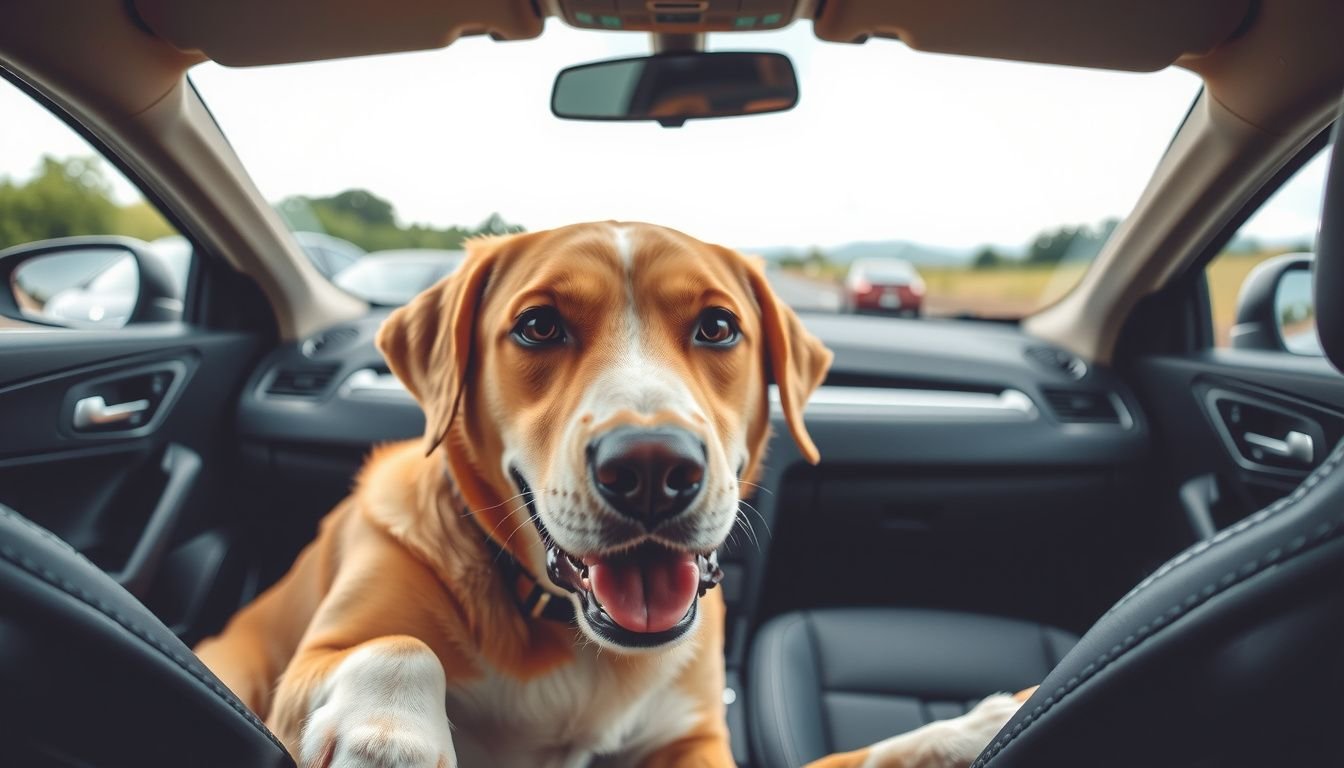
If you’re searching for real solutions on how to calm dog down in car, you’re not alone. I remember the first time I took my rescue dog on a road trip—she shook, drooled, and barked the whole ride. I felt helpless and frustrated.
Over time, I learned that easing her nerves was totally possible with the right strategy. This guide shares practical steps I use to make every car ride smoother and less stressful for both of us. Whether your dog’s a seasoned traveler or a nervous newbie, I’ll walk you through each phase so you can hit the road with less chaos and more tail wags.
Assess My Dog’s Current Comfort Level in the Car
Before doing anything else, I spend a few minutes observing how my dog reacts when near or inside the car. Is she excited, nervous, or frozen in place? Some signs of distress include whining, panting, drooling, or refusing to get in at all.
If she hops in with a wagging tail, I know we can work on fine-tuning her comfort. But if she backs away or trembles, we’ll need to take things slow.
Here’s a quick checklist I use:
- Does my dog pace or look for an exit?
- Is there excessive barking or whining?
- Does she settle after a few minutes or stay anxious?
By pinpointing her stress signals, I can tailor the next steps to match her current comfort level.
Gather Essentials Before We Head Out
I never start a car training session without prepping my supplies. Having the right gear ready makes the process smoother and safer. Here’s what I always pack:
- Favorite blanket or bed
- High-value treats (think chicken or cheese, not kibble)
- Favorite chew toy or calming toy
- Secure harness or carrier
- Water and travel bowl
- Doggie seat belt clip (for safety)
Having these on hand helps my dog associate the car with comfort and fun, not just stressful trips to the vet.
Introduce My Dog to the Car Gradually
Jumping straight into a long drive is a recipe for disaster. Instead, I break the process into baby steps:
- Let my dog sniff and explore the car while it’s off and doors are open.
- Practice sitting together in the back seat for a few minutes, no driving.
- Gradually close the doors, then add short sessions with the engine running.
I keep treats handy to reward calm behavior and never force her inside. Sometimes, we repeat a step over several days. When she’s visibly relaxed—maybe even napping—I know we’re ready for the next phase.
Create a Cozy and Safe Car Environment
Making the car feel like a safe den works wonders for anxious dogs. I always line the seat with her favorite blanket and bring a familiar-smelling object from home. If she prefers a crate, I secure it so it doesn’t slide around.
Here are my top comfort tips:
- Keep the temperature cool, but not cold
- Block loud noises with soft music or a white noise machine
- Use a sunshade to avoid overheating and blinding sunlight
A secure spot in the back seat (never the front) gives her peace and limits distractions.
Use Positive Reinforcement and Treats
Every time my dog shows calm or curious behavior in the car, I reward her immediately. High-value treats, praise, and gentle petting reinforce that the car is a good place. I avoid scolding or raising my voice—anxiety can spike if she senses my frustration.
For example, during one of our first sessions, my dog hesitated at the car door. I tossed a piece of chicken onto the seat, and she jumped right in! That little win built her confidence and made future sessions easier.
Consistency is key: rewards always follow calm behavior in or near the car.
Try Short Drives and Build Up Slowly
Once my dog is comfortable just being in the car, I start with ultra-short drives—literally a trip around the block. I keep these sessions positive, ending them before she gets stressed. If she stays calm, I reward her at the end of each ride.
Over days or weeks, I gradually increase the distance and duration. If she starts showing anxiety, I backtrack to shorter trips. It’s not about speed; it’s about steady progress.
Pro tip: I always pick destinations she loves at first—like the park or a friend’s house—so the car predicts good things.
Handle Anxiety and Unexpected Reactions
Even with preparation, unexpected things can happen. If my dog starts panting or whining mid-drive, I find a safe place to pull over and let her regroup. Sometimes, just sitting together for a minute calms her down.
I never punish her for being scared.
For persistent car anxiety, I’ve tried natural calming sprays, anxiety wraps, or even consulting my vet about anti-anxiety options. Every dog’s needs are different—what works for one might not for another.
Staying flexible and patient is my secret weapon when things don’t go as planned.
Maintain Calm Energy and Monitor Progress
Dogs pick up on our emotions, so I always try to project calm confidence before and during rides. I keep my voice steady, avoid rushing, and stick to the routines that make my dog feel safe.
I track her progress in a simple notebook—jotting down what worked and what didn’t after each session. This helps me spot patterns or triggers that I might miss in the moment.
Small wins add up. Over a few weeks, my once-nervous dog now hops in the car with a wagging tail and relaxed posture. That feels like magic—but it’s really just patience and practice.
Your Action Plan
Ready to make car rides stress-free for both you and your pup? Start by assessing your dog’s comfort in the car, then gather your essentials. Introduce her to the car slowly, create a cozy space, and reward every calm moment.
Build up drive time in small, positive increments, and stay patient if setbacks happen. Keep your own energy steady and monitor how she’s doing each step of the way. Stick with this plan, and soon, you’ll both be looking forward to every adventure together—no more drama, just wagging tails and happy memories.