
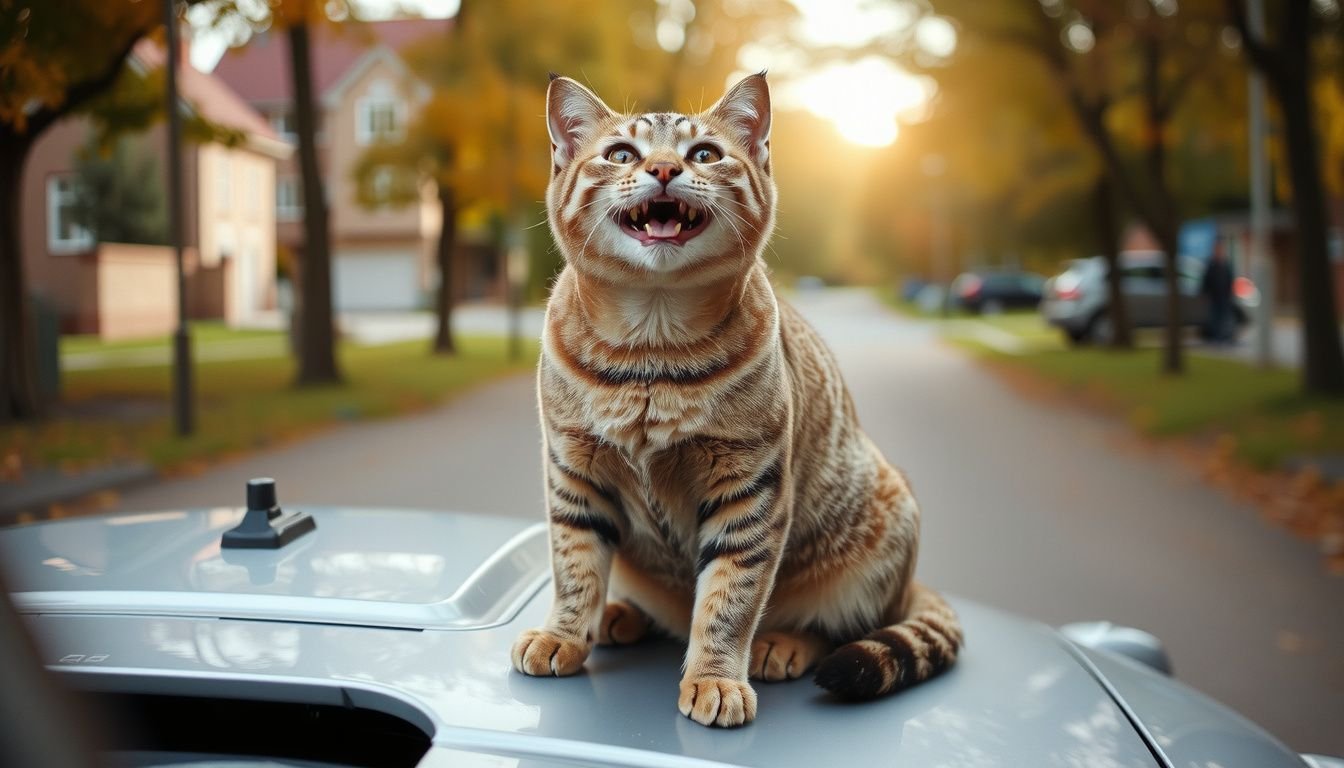
If you’ve ever searched “what is cat on a car,” you’re likely seeing one of two things: an actual cat lounging on your vehicle or references to the “catalytic converter” (often called the “cat” by mechanics) located underneath your car. However, most people are talking about neighborhood cats perching on their car’s hood, roof, or windshield. This behavior can be both amusing and annoying—especially if you spot muddy paw prints or mysterious scratches the next morning.
Whether you’re a car enthusiast worried about your paint job or a cat lover curious about this quirky habit, it’s important to understand why cats are drawn to cars, the risks involved, and how you can keep both your vehicle and the local feline population safe.
Quick Answer: What Is Cat on a Car?
When someone talks about a “cat on a car,” they’re describing a live cat physically sitting, lying, or climbing on a parked vehicle. It’s a common sight in residential areas, especially in cooler weather or quiet neighborhoods. Cats are attracted to the warmth of recently driven cars, the elevated vantage point, and the smooth, flat surfaces vehicles provide.
Don’t confuse this with the automotive term “cat,” which refers to the catalytic converter—a pollution-control device under your car. In most social and practical cases, “cat on a car” means a feline visitor lounging on top, not a part underneath. For example, you might spot your neighbor’s tabby stretched across your hood on a chilly morning, soaking up the residual engine heat.
Why Do Cats Like to Sit on Your Car?
Cats seek out your car for three main reasons: warmth, safety, and curiosity. Here’s how each plays out:
- Warmth: The engine and metal surfaces retain heat long after you’ve parked. This makes your car a cozy spot, especially in cold weather.
- Height and Safety: Sitting on a car gives cats a higher vantage point to survey their territory and avoid potential threats from dogs or other animals.
- Curiosity and Comfort: The smooth, flat surfaces of a hood or roof are comfortable places for a cat to rest, nap, or simply watch the world go by.
Imagine coming out on a winter morning to find a neighborhood cat curled up on your car’s hood, leaving a faint outline of paw prints in the condensation—a classic example of this behavior. This isn’t just random: cats instinctively look for warm, safe, elevated spots.
Potential Risks of Cats on Your Car
While seeing a cat on your car can be cute, it’s not without downsides. The main risks include:
- Scratches and Paint Damage: Sharp claws can leave scratches on your car’s paint, especially if the cat jumps or slides off.
- Dirt and Paw Prints: Cats may track mud, dust, or pollen onto your vehicle, leaving visible marks.
- Allergic Reactions: People with cat allergies might experience sneezing or irritation from fur left behind.
- Damage to Convertible Tops or Soft Roofs: Cloth or vinyl roofs are more vulnerable to punctures and tearing.
- Potential for Cats Getting Trapped: Rarely, a cat might crawl into the engine bay for warmth and become stuck or injured if the car starts.
For car owners with a pristine paint job or soft-top convertible, a cat lounging on your car can mean an unexpected trip to the detail shop. Keep in mind, though, not all cats will cause visible damage—some may simply leave a few harmless paw prints behind.
How You Can Prevent Cats from Climbing on Your Car
If you want to keep cats off your car, several proven methods can help. Here’s what works:
- Car Covers: Investing in a fitted car cover creates a physical barrier, protecting paint from claws and dirt.
- Repellent Sprays: Cat-safe repellents, often citrus-scented, can discourage felines from approaching your vehicle.
- Motion-Activated Devices: Use motion-activated sprinklers, lights, or ultrasonic deterrents to startle cats without harm.
- Change Your Parking Spot: If possible, park in a garage or covered area to minimize exposure.
- Offer Alternatives: Place a cozy cat shelter or heated pad away from your car to attract cats elsewhere.
For example, one homeowner placed a cheap outdoor cat house in the far corner of their driveway. The local cats quickly switched from the car hood to the new, warmer shelter—saving the paint and keeping everyone happy.
Common Questions
Does a “cat on a car” ever refer to car parts?
Yes. In automotive lingo, “cat” can mean “catalytic converter,” but most people are talking about a live cat physically on top of a car.
Are cats attracted to all types of cars?
Cats prefer cars that have just been driven (still warm) or have flat, accessible surfaces. Convertibles, SUVs, and sedans are all fair game.
Can cats really damage your car’s paint?
Yes, especially if their claws dig in or if they slide off the car. Minor scratches and scuffs are the most common issues.
The Short Version
A “cat on a car” usually means a live cat resting on your vehicle, drawn by warmth and safety. This habit can lead to scratches, paw prints, or allergic reactions. To prevent cats from climbing on your car, use covers, repellents, or motion-activated devices.
Offering a cozy cat shelter nearby can also redirect their attention. Understanding why cats love your car helps you protect both your vehicle and your neighborhood’s feline residents.