
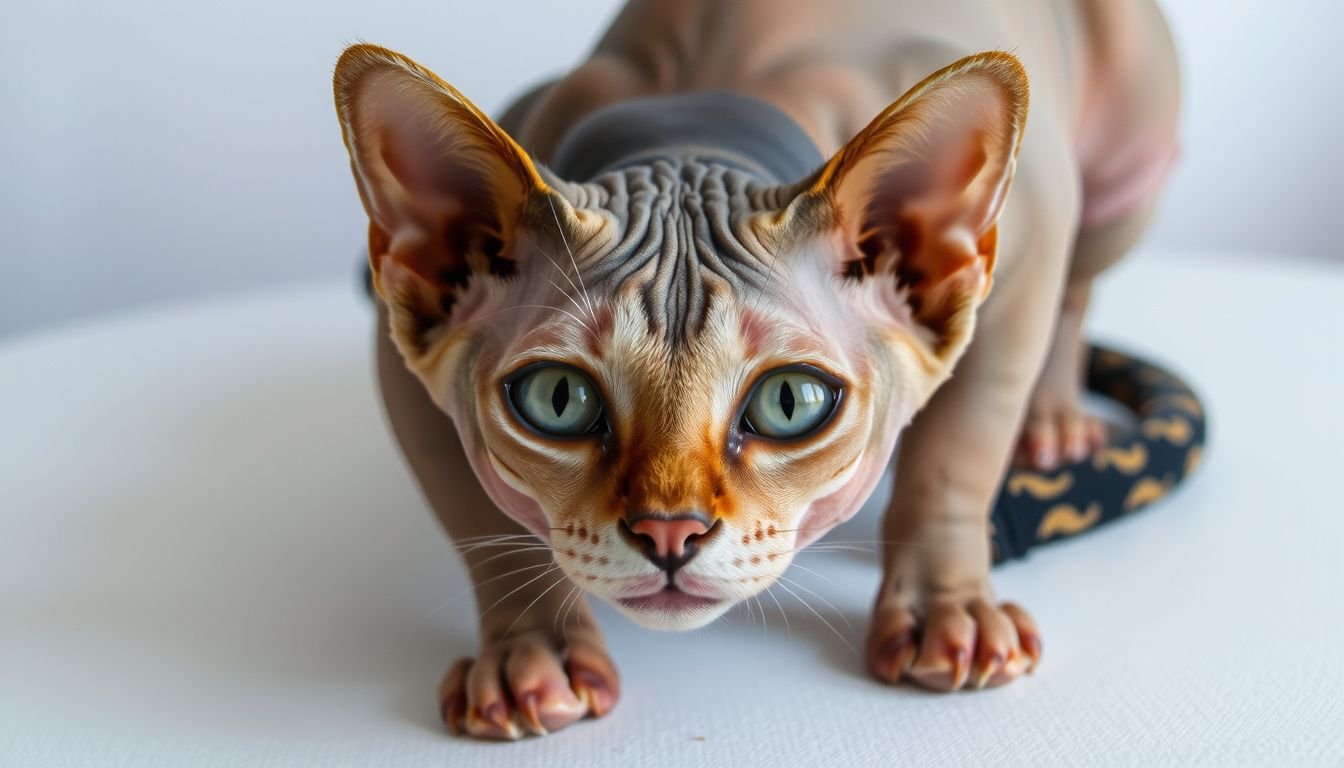
If you’ve ever wondered how to care for a hairless cat, you’re in the right place. These unique felines—like the Sphynx, Bambino, and Peterbald—demand a little more from you than their furry counterparts. Without a protective coat, they’re more exposed to the elements and require special care to keep their skin, health, and happiness in check.
But don’t worry; once you understand their needs, keeping them thriving is totally doable. You’ll learn how to set up your home, establish a simple bathing routine, safeguard their delicate skin, optimize nutrition, and watch for health issues. For instance, think of how a Sphynx cat might sunbathe on your windowsill—adorable, but you’ll need to keep her safe from sunburn.
Let’s get you ready for this rewarding companion.
Prepare Your Home for a Hairless Cat
Your first step is making your environment safe and comfortable. Hairless cats have trouble regulating body temperature and are prone to scrapes and skin issues.
- Keep your home warm: Avoid cold drafts and maintain temperatures between 68–77°F (20–25°C).
- Soft bedding: Provide plenty of plush blankets and beds. Fleece is a go-to—easy to wash and gentle on skin.
- Limit sun exposure: Direct sunlight can easily cause sunburn. Use curtains, window films, or move cat beds out of bright sun.
- Safe surfaces: Remove rough rugs or sharp-edged furniture. These cats have no fur buffer, so skin tears are a real risk.
Real-world example: You might notice your hairless cat seeking out your laptop keyboard for warmth—offering a heated pet pad is a safer solution.
Establish a Gentle Bathing Routine
Unlike furry cats, hairless breeds can’t absorb body oils, so regular bathing is essential. Don’t skip this step, or you’ll end up with dirty, sticky skin and possibly clogged pores.
- Bathe every 1–2 weeks: Use lukewarm water and a mild, hypoallergenic pet shampoo. Human products can irritate their skin.
- Rinse thoroughly: Leftover soap can cause rashes.
- Dry gently: Pat, don’t rub, with a soft towel.
- Clean ears and trim nails: Wax and dirt build up quickly. Use vet-recommended solutions and avoid deep cleaning ears yourself.
Pro tip: Start baths young—adult cats unfamiliar with water can get stressed and scratch. Always reward calm behavior for smoother future baths.
Protect Your Cat’s Skin Every Day
With no fur, your cat’s skin is exposed to sun, cold, and dirt. Your daily routine should focus on protection and cleanliness.
- Moisturize if needed: Some cats develop dry patches. Use only vet-approved, fragrance-free moisturizers.
- Monitor for sunburn: If your cat loves to sunbathe, limit exposure to 10–15 minutes and never use human sunscreen.
- Dress wisely: Soft, well-fitting cat shirts help in cold weather but remove them daily to let skin breathe.
- Wipe downs: Use unscented baby wipes or a damp cloth between baths to keep skin clean.
Common mistake: Overbathing can dry out skin—stick to your schedule and watch for any irritation.
Maintain Optimal Nutrition and Hydration
Your hairless cat burns more calories than furry cats due to heat loss, so proper feeding is crucial.
- High-quality food: Choose balanced, protein-rich diets. Consult your vet for brand and portion recommendations.
- Monitor weight: Underfeeding leads to chills; overfeeding causes obesity. Adjust portions as activity and seasons change.
- Hydration: Provide clean water at all times. Consider a cat fountain—hairless cats sometimes drink more due to increased metabolism.
Example: If your Sphynx is always hungry and losing weight, bump up meal sizes slightly and monitor the results—these cats often need more calories in winter.
Monitor Health and Address Common Issues
Hairless cats are generally healthy, but their unique physiology exposes them to specific risks. Stay proactive.
- Skin checks: Look for redness, scratches, pimples, or unusual spots weekly. Early intervention is key.
- Ear care: Excess wax is common. Clean gently with a vet-approved solution—never insert cotton swabs deep into the ear canal.
- Eye care: Without eyelashes, debris can irritate eyes. Wipe discharge with a damp, soft cloth as needed.
- Regular vet visits: Schedule yearly checkups and discuss vaccinations, spay/neuter, and any concerns.
Watch for: Lethargy, appetite changes, or persistent skin issues. These signs may mean it’s time to see your vet right away.
People Also Ask
Do hairless cats get cold easily?
Yes, hairless cats lose body heat faster than furry breeds. Keep your home warm and provide soft, insulated bedding—especially in winter.
How do you clean a hairless cat’s ears?
Use a vet-approved ear cleaner and soft cotton pad. Gently wipe only the outer ear, never inserting anything deep into the ear canal.
Can you put sunscreen on a hairless cat?
No, most human sunscreens are toxic to cats. Limit direct sun exposure and use protective clothing or shade instead.
What to Do Now
Now that you know how to care for a hairless cat, take a moment to review your living space and supplies. Set up cozy sleeping areas, source gentle shampoo, and talk with your vet about dietary needs. Establish a regular routine for bathing, skin checks, and health monitoring.
With attention, patience, and the right tools, you’ll keep your hairless companion happy, healthy, and safe—starting today.