
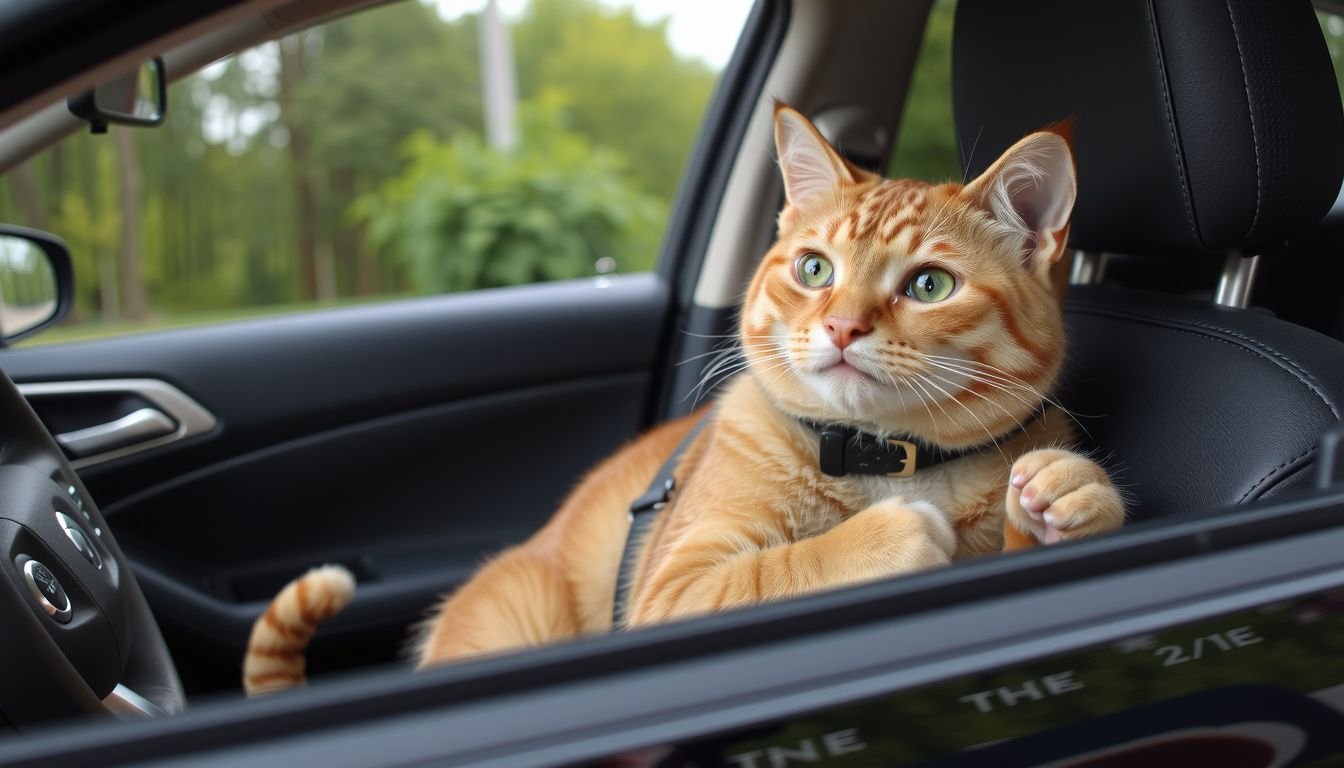
Why do cats hate riding in cars? For many cats, a car trip isn’t “a quick errand”—it’s a confusing mix of restraint, strange motion, and unfamiliar sensory overload.
You’re asking your cat to leave a safe territory, enter a small box, and tolerate movement they can’t control. That’s a lot, even for a confident pet.
If you’ve ever watched your cat pant, yowl, drool, or try to escape the carrier, you’ve seen real stress signals—not stubbornness.
Look, the good news is you can reduce car-ride panic with the right setup, gradual practice, and vet support when needed. Use the sections below to pinpoint your cat’s trigger and act on it.
Quick Facts Box
- Most common reasons: fear of confinement, motion sickness, sensory overload, loss of territory
- Common stress signs: yowling, drooling, panting, vomiting, urinating/defecating, rigid posture
- Best first steps: carrier training at home, short practice rides, calm handling, vet check for nausea/anxiety
- Safety non-negotiable: secured carrier, no loose cat in the car, no sedation without vet guidance
What your cat experiences in a moving car
Your cat’s body is built for controlled movement—jumping, climbing, stalking—not being carried through space at speed. In a car, acceleration, braking, and turns shift their balance constantly.
At the same time, your cat can’t predict what’s coming. That uncertainty activates a fight-or-flight response, especially if past trips ended with stressful events like a vet visit.
You’ll often see this as wide eyes, flattened ears, low crouching, and vocalizing. Some cats freeze; others thrash or paw at the carrier door.
If you want a calmer ride, start by treating the experience like exposure training, not a one-off event you “push through.”
Why the carrier alone can trigger fear
To your cat, the carrier can mean one thing: loss of escape routes. If the carrier only appears before car rides, it becomes a powerful predictor of stress.
Carrier fear is common when the carrier is stored out of sight, smells like disinfectant, or requires being “stuffed” inside. Your cat learns to resist because resistance sometimes works.
Make the carrier part of normal life. Keep it out with soft bedding and toss treats inside so your cat chooses to enter.
Use a top-loading carrier if possible; it reduces wrestling and makes handling gentler for both of you.
Motion sickness: when nausea drives the panic
Some cats don’t just feel scared—they feel sick. Motion sickness can cause drooling, lip-licking, vomiting, and frantic behavior that looks like anxiety.
Kittens are more prone, but any cat can develop nausea, especially on winding roads or long trips. If your cat vomits repeatedly or only panics after a few minutes of driving, nausea is a strong suspect.
Try feeding a small meal 3–4 hours before travel, not right before you leave. Keep the car cool and drive smoothly.
If symptoms persist, your vet can recommend anti-nausea medication that’s safer and more targeted than sedatives.
Stress from unfamiliar smells, sounds, and vibrations
Your cat’s senses are sharper than yours. The car is full of loud, high-frequency sounds, engine vibration, and shifting air pressure—plus smells from gas, cleaners, and other animals.
Those inputs stack quickly. Even “normal” noises like turn signals, music bass, or highway wind can feel threatening.
Reduce sensory load with a covered carrier (leave airflow open), a familiar blanket, and low cabin noise. Avoid strong air fresheners and harsh cleaning sprays.
If possible, pre-cool or pre-warm the car so your cat isn’t hit with a temperature shock when you start the trip.
Loss of control and territory: why travel feels threatening
Cats are territory-based. Your home smells like “you and your cat,” and that predictability equals safety. A car strips that away in seconds.
In the vehicle, your cat can’t patrol, hide well, or choose distance from what scares them. Being confined in a moving environment is the opposite of how cats manage risk.
That’s why loose cats in cars are dangerous: they’ll try to regain control by climbing, wedging under pedals, or bolting when a door opens.
Use a secured carrier every time. It’s not optional—it’s your best safety tool.
How your cat reads your mood during car trips
Your cat watches you closely. If you’re rushing, tense, or apologizing while forcing the carrier, your cat learns that the situation is unsafe.
Calm routines matter. Quiet movements, steady breathing, and predictable steps reduce your cat’s uncertainty.
Try a simple script: carrier appears, treats happen, you lift smoothly, you buckle the carrier, you start the engine after a short pause. Consistency builds trust.
If you’re stressed, build in extra time. Your cat doesn’t need a perfect trip—they need a predictable one.
How to prepare your cat for car rides (before you drive)
Preparation is where you win. Start days or weeks ahead if you can, especially for cats with a strong fear response.
Focus on carrier comfort and short, positive exposures. Reward calm behavior, not just “getting through it.”
- Carrier training: leave it out, feed treats inside, close the door briefly, then reopen
- Handling practice: gentle lifting and placing into the carrier without chasing
- Car acclimation: sit in the parked car for 2–3 minutes, treat, then go back inside
Now add micro-rides: one minute around the block, then stop and go home. Home should be the frequent “reward destination.”
What to do during the ride to reduce stress and mess
Set up the ride like a safety protocol. Secure the carrier with a seat belt, keep it level, and cover it partially to reduce visual stress.
Practical example: If you’re driving 20 minutes to the vet, place a pee pad under the bedding, spray a feline pheromone in the carrier 15 minutes before loading (not directly on your cat), and play low, steady music while taking the smoothest route.
- Drive gently: slow starts, gradual stops, wide turns
- Keep the cabin cool and quiet
- Don’t open the carrier door in the car
If your cat soils the carrier, stay neutral. Clean later; your job is to keep the trip calm and safe.
When to call your vet: anxiety, medication, and safety tips
Call your vet if your cat vomits often, pants heavily, injures themselves trying to escape, or stays distressed long after the ride ends. Those signs can indicate motion sickness, severe anxiety, or an underlying medical issue.
Your vet may suggest behavior training, anti-nausea medication, or prescription anti-anxiety options for travel. Avoid over-the-counter sedatives and never use human medications unless your vet directs you.
Ask about timing and dosing before the travel day, and do a trial run at home when appropriate. You want predictable effects, not surprises.
If your cat is extremely fearful, request a low-stress handling plan for appointments so the destination stops reinforcing the panic.
60-Second Recap
You’re not imagining it—many cats hate car rides because the experience combines confinement, unpredictable motion, and intense sensory input. If nausea is involved, fear can escalate fast.
- Your cat may be reacting to motion + loss of control, not “bad behavior.”
- The carrier can be a trigger if it only appears before stressful trips.
- Motion sickness often shows up as drooling, vomiting, and escalating panic.
- Reduce stress with a secured carrier, partial cover, cool quiet cabin, and smooth driving.
- Train in tiny steps: carrier comfort, parked-car sessions, then short rides that often end at home.
- Call your vet for repeated vomiting, heavy panting, self-injury, or severe anxiety—safe medical help can be a game-changer.