
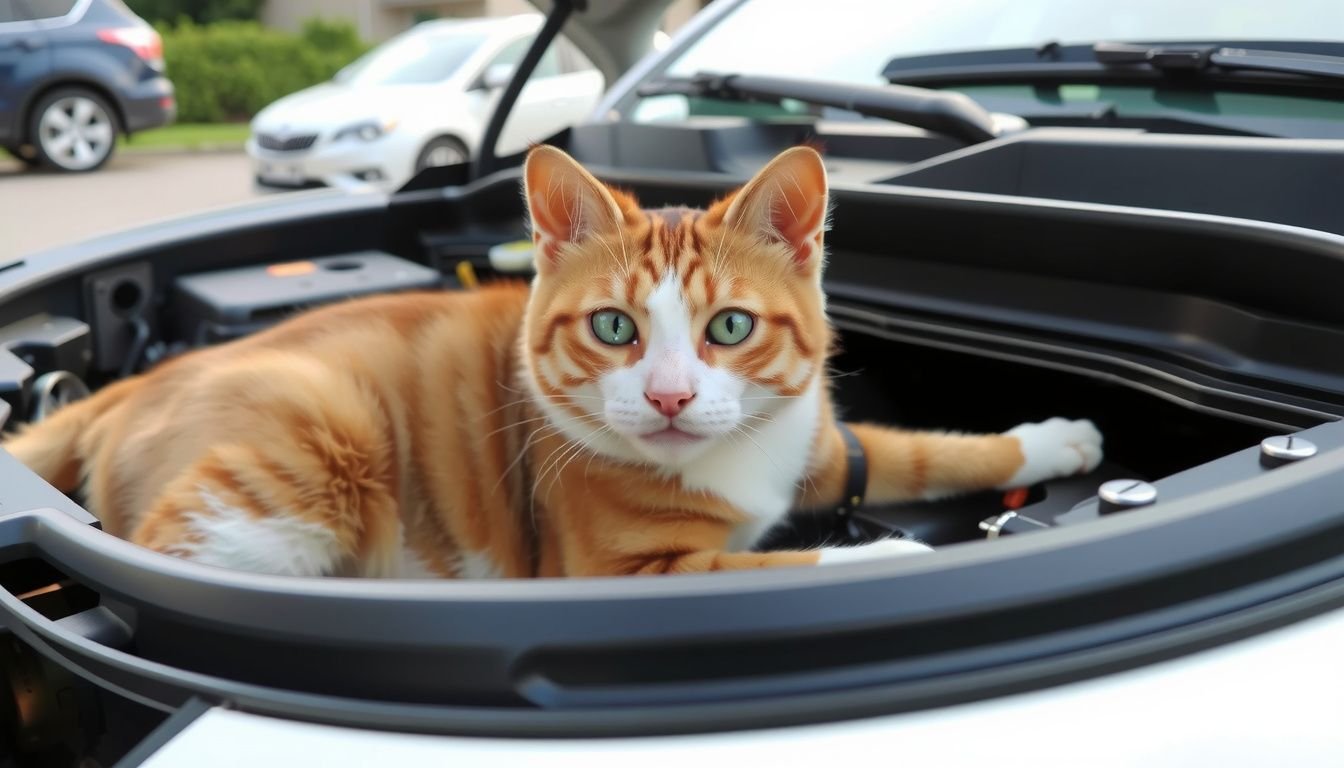
Worried about how to get cat out of car engine safely? You’re not alone. Cats often seek shelter in warm engine bays, especially during colder seasons.
It’s a tricky situation: you need to protect both the animal and your vehicle. This guide gives you a clear, step-by-step approach to resolving this scenario without causing harm or stress to the cat—or yourself. You’ll learn how to prepare, assess, and act with the right tools and mindset.
Look, even seasoned drivers deal with this. For example, last winter, a neighbor found a stray kitten snuggled above her car’s radiator. She followed a simple routine and the kitten scampered out unharmed.
Let’s make sure you’re just as prepared, with practical steps that work.
Prepare Before You Approach Your Car
Before you do anything, set yourself up for a safe, stress-free process. Turn off your engine immediately if it’s running—heat and moving parts are dangerous. Avoid startling the cat with sudden noises or movements.
- Wear gloves and long sleeves to protect yourself from scratches.
- Keep children and pets away from the vehicle.
- Have a flashlight ready for visibility.
Take a deep breath. Patience is your best tool here. Rushing can spook the cat, making things harder for both of you.
Think safety first for everyone involved.
Assess the Situation and Ensure Safety
Get a good look at where the cat is hiding. Check under the car and through the wheel wells. Shine your flashlight around the engine bay, but do it gently—bright lights can scare animals.
- Listen for meows or movement.
- Scan for signs of injury or distress.
- Note if the cat appears feral or domesticated.
If you see wires or belts near the cat, don’t try to start the engine under any circumstances. Your immediate goal is to avoid causing harm by moving slowly and keeping the area quiet.
Gather the Right Tools and Supplies
Having the right gear on hand streamlines the process and minimizes risk. Here’s what you should assemble:
- Heavy-duty gloves
- Flashlight or headlamp
- Towel or thick blanket
- Cat carrier or box
- Strong-smelling food (tuna, sardines)
Don’t forget your phone in case you need to call animal control or a local rescue. If the cat looks injured or aggressive, professional help is the safest choice.
Encourage the Cat to Exit Voluntarily
Cats prefer to leave on their own terms. Give them a safe escape route. Open your car’s hood slowly but fully.
Step back—distance lowers their stress.
- Place food or treats a few feet from the car, near the ground.
- Wait quietly. Avoid eye contact; it can seem threatening.
- Call softly or make gentle clicking noises.
If you’re patient, most cats will come out on their own. Don’t force them—coaxing is more effective than grabbing. As a real-world example, placing an open can of tuna under the front bumper once lured a stubborn kitten out in under five minutes.
Use Gentle Methods to Guide the Cat Out
If the cat isn’t budging, use safe, non-invasive tactics. Try softly tapping on the hood or fender to encourage movement. Avoid poking or prodding with objects.
- Drape a towel over your hand if you need to reach in—never bare hands.
- Move slowly, speaking in a calm voice.
- If possible, create a tunnel with a blanket from the engine bay to the ground.
Never use water, air, or loud noises. These can terrify the cat, causing it to wedge in deeper or get injured.
Check for Injuries and Secure the Cat
Once you’ve helped the cat out, don’t let it run off immediately. Look for visible injuries: limping, bleeding, singed fur, or lethargy. If safe, wrap the cat gently in a towel to prevent escape.
- Place the cat in a carrier or box for observation.
- Contact a veterinarian if you suspect any injury.
- Scan for a collar or microchip—there may be an owner looking for it.
Even if the cat seems fine, monitor it for a while. Internal injuries or shock can show up hours later.
Prevent Future Incidents Effectively
Now that you’ve helped this cat, take steps to keep it—and others—safe in the future. Cats are creatures of habit and will return to cozy spots.
- Tap the hood or honk the horn before starting your car.
- Park in garages or block engine access when possible.
- Use commercial animal deterrent sprays around your parking spot.
- Talk to neighbors about the issue, especially if there are many stray cats nearby.
Routine checks can prevent tragedy and keep your engine—and local cats—out of harm’s way.
Quick Answers
How long can a cat survive in a car engine?
Usually, a cat can hide for several hours, but heat or moving parts can cause fatal injuries in minutes if the engine is started.
What if the cat won’t come out?
Stay patient. Try food, wait quietly, and if necessary, call animal control or a local rescue for safe assistance.
Is it dangerous to remove a cat myself?
Yes, there’s risk of bites, scratches, or injury to you or the cat. Wear gloves, move slowly, and call for help if the cat is aggressive or stuck.
Will a cat damage my car engine?
Yes, cats can chew wires, dislodge parts, or shed fur, leading to mechanical issues if not removed promptly.
What to Do Now
If you’ve just freed a cat, monitor it and inform local shelters if it’s a stray. Check your car for damage before restarting. Make hood-tapping a habit before driving.
Consider alerting your neighbors to protect more cats in your area. You’re now equipped to handle this situation safely and compassionately—don’t hesitate to share your knowledge with others. Stay vigilant and proactive for everyone’s safety.