
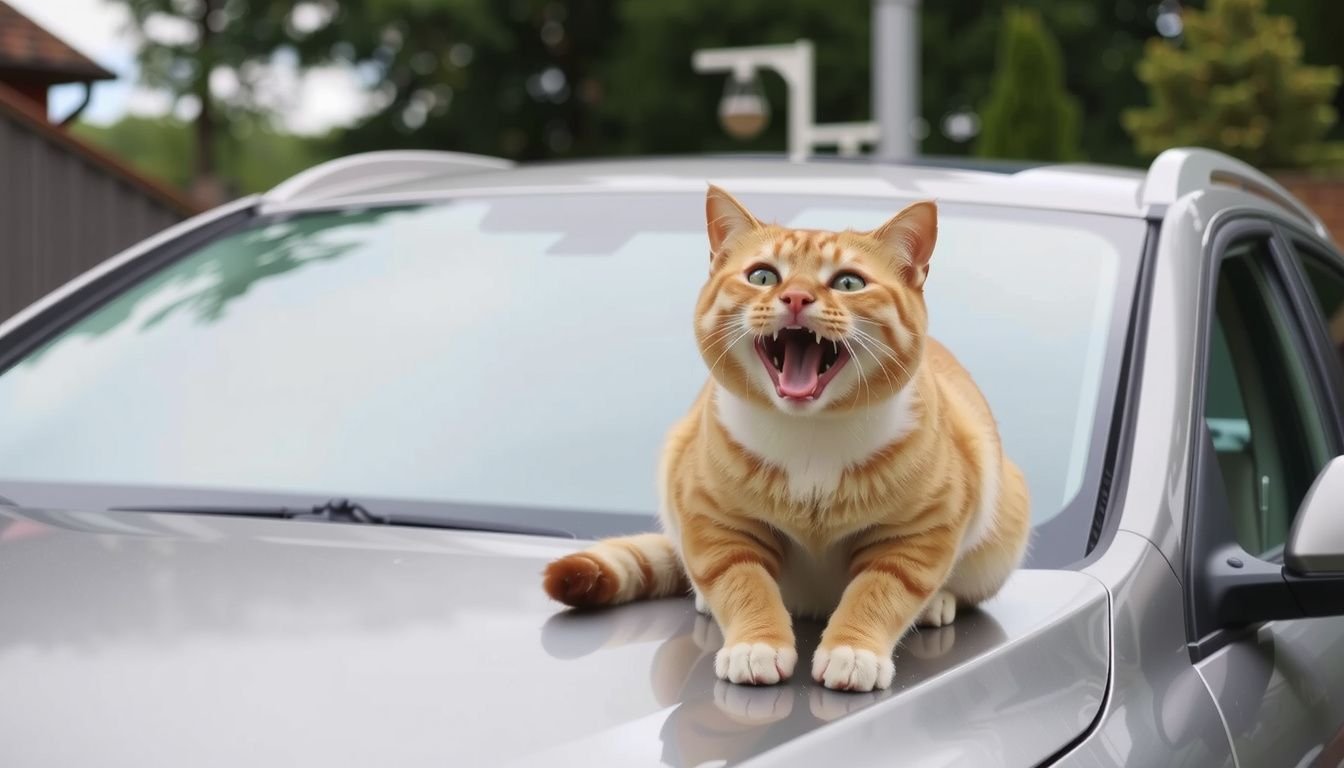
How to keep a cat off a car comes down to understanding why the cat chose your vehicle, then making that choice unrewarding without harming the animal or your paint.
Cats climb on cars for warmth, height, safety, and scent-marking. Once a routine forms, they’ll return—especially if your hood stays warm or your driveway feels quiet and protected.
You’ll get the best results by pairing two layers: remove what attracts the cat, then add humane deterrents that feel annoying (not dangerous). Expect a few weeks of consistency. If you switch methods every day, the cat simply waits you out.
Look, you don’t need exotic gadgets. With a few safe supplies and a clear plan, you can protect your finish, reduce paw prints, and stop the nightly “hood lounge” habit.
Confirm Why the Cat Keeps Using Your Car
Start by identifying the “reward” your car provides. If you don’t address the reward, deterrents become a temporary speed bump.
Check patterns for 3–5 days. Note the time of day, weather, and where the cat sits (hood, roof, windshield base). Warmth after you park is a big driver, especially in cooler months.
- Heat: warm hood/engine after driving.
- Height: roof as a lookout from dogs or people.
- Scent: cats rub, scratch lightly, or spray near tires.
- Shelter: car cover folds or nearby shrubs create a “safe zone.”
Pro tip: Look for paw prints, fur, or light claw haze in dust to confirm contact points.
Common mistake: blaming “bad behavior.” It’s usually comfort plus habit, not spite.
Before You Start: Gather Safe Deterrents and Protect Your Paint
Choose deterrents that are humane and compatible with automotive finishes. Avoid anything sticky, corrosive, or strongly oily that can stain clear coat.
Gather supplies so you can apply changes in one weekend, not over a month.
- Motion-activated sprinkler or outdoor motion sensor alarm (driveway-safe)
- Citrus- or herbal-based cat repellent labeled safe for outdoor use
- Plastic “spike” mats designed for cats (blunt, flexible tips)
- Car cover (smooth, fitted) or windshield/hood protector mat
- Microfiber towels and pH-neutral car wash soap
Pro tip: If you use a cover, pick one with a soft inner liner and secure straps so it doesn’t flap and abrade paint.
Common mistake: using cayenne, vinegar, bleach, or essential oils on the car. Many can damage paint, irritate pets, or create fumes.
Remove Attractants and Mark the Area as Off-Limits
Make your parking spot less appealing before you add deterrents. This reduces how “hard” your deterrents need to work.
- Cool the car faster: if safe, crack windows slightly and park in shade to reduce hood warmth.
- Clean scent cues: wash the hood/roof to remove skin oils and any marking odor; rinse well.
- Reduce hiding spots: trim shrubs near the parking area and remove clutter the cat uses as cover.
- Block access routes: move bins, woodpiles, or low fences that act like steps to the hood.
Pro tip: Place a bright, temporary visual boundary (like small cones or reflective stakes) around the spot for a week. Cats notice change and become cautious.
Common mistake: feeding stray cats near the driveway. Even “not my cat” becomes “my parking spot” fast.
Set Up Humane Deterrents Around and On Your Parking Spot
Use a layered setup: one deterrent to interrupt approach, another to make the surface unpleasant. Rotate only after 7–10 days if the cat adapts.
| Deterrent | Best placement | Why it works |
|---|---|---|
| Motion-activated sprinkler | Edge of driveway / approach path | Startles without harm; stops the approach |
| Cat “spike” mat (blunt) | Hood base or roof edge (secured) | Uncomfortable footing; discourages sitting |
| Outdoor cat repellent (pet-safe) | Ground near parking spot (not on paint) | Creates a scent boundary |
For on-car protection, a fitted cover or hood protector is often the simplest. If you use mats, secure them so they can’t slide off in wind.
Practical example: You park at 6 p.m., and the cat appears around 9 p.m. Set a motion sprinkler aimed at the approach path and add a hood protector. Within a week, the cat usually shifts to a warmer, quieter spot.
Common mistake: placing deterrents only on the hood. Stop the approach first, or the cat will keep testing.
Reinforce the Habit and Know When to Escalate
Consistency is the whole game. Cats learn by repetition, so you need to “pay” the new behavior daily until it sticks.
- Keep deterrents active every night for 2–3 weeks.
- Reapply repellents as directed, especially after rain.
- Wash and inspect paint weekly; remove paw grit that can micro-scratch.
- If you see marking (spray), clean the area and focus on perimeter deterrents.
If the cat is persistent or you suspect it’s a community cat, escalate humanely: talk to neighbors about feeding locations, contact a local rescue for trap-neuter-return guidance, or ask your vet about safe deterrent products for your setting.
Pro tip: Once the cat stops for 10–14 days, taper slowly—don’t remove everything overnight.
Common mistake: chasing the cat. It can increase stress, trigger marking, and make the cat return at quieter times.
Common Questions
Will aluminum foil on the hood work?
Sometimes, but it’s unreliable outdoors and can blow off, scratch paint, or annoy neighbors. If you try it, place it on a soft hood protector—not directly on clear coat.
Are ultrasonic cat deterrents effective?
They can help in small areas, but results vary by model, placement, and ambient noise. Use them as a secondary layer, not your only solution.
What smells keep cats away safely?
Use commercial outdoor repellents labeled for cats and follow directions. Avoid essential oils and harsh household chemicals; they can be toxic to pets and risky for paint and plants.
How do I stop paw prints without harming the cat?
Wash the car, then prevent contact: use a fitted cover or hood mat plus a motion deterrent on the approach path. Reducing access is more reliable than surface tricks.
When should I call animal control or a rescue?
If the cat appears injured, is repeatedly spraying, or you’re dealing with multiple cats, contact a local rescue or TNR group. They can reduce roaming and future conflicts.
Start Here
Tonight, do three things: wash the hood and roof, remove nearby “step-up” objects, and set a motion-based deterrent on the approach route. Tomorrow, add a fitted cover or hood protector for consistent surface protection.
Stick with the setup for 2–3 weeks, then taper slowly once the cat stops visiting. If the behavior persists, coordinate with neighbors and consider humane community-cat support through a rescue or TNR program.
Related read: How to Get a Cat Out of a Car Engine Step-by-Step