
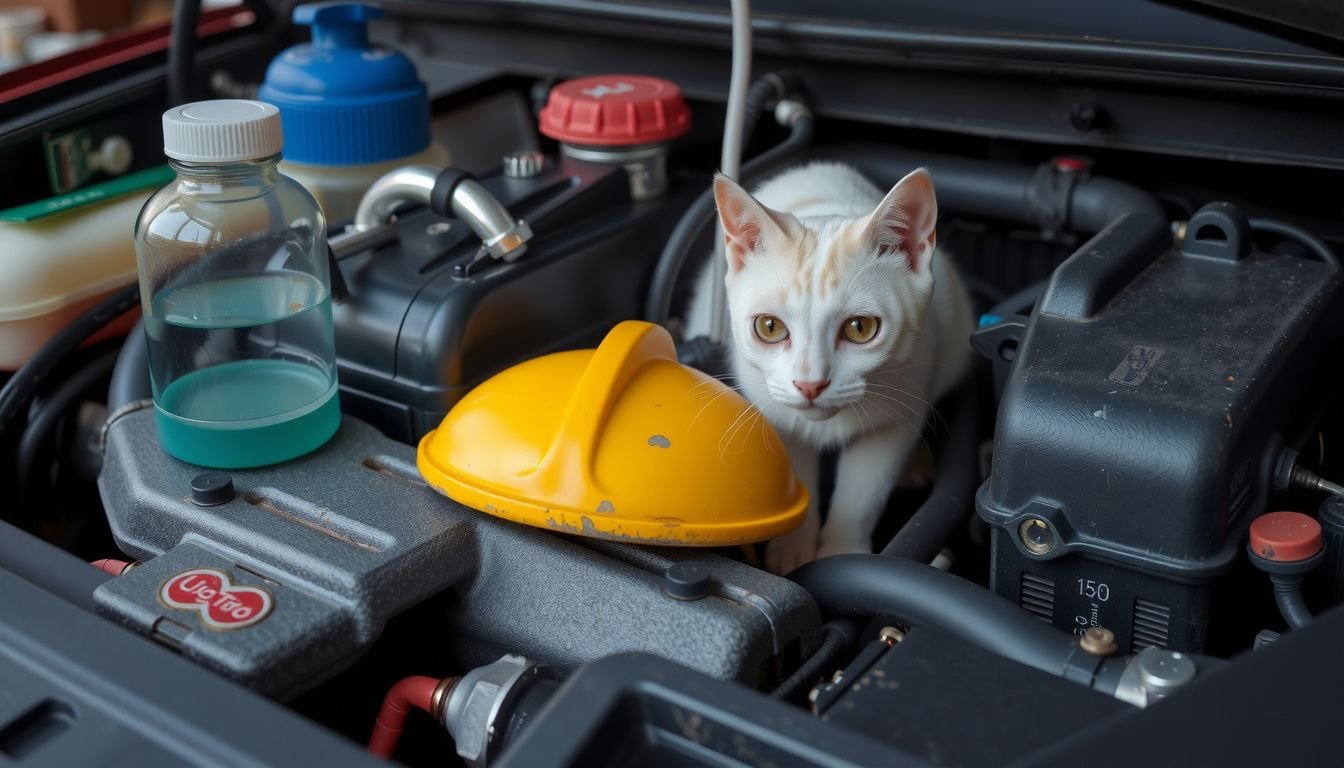
How to get a cat out of a car engine starts with slowing down and keeping the scene quiet. Cats crawl into warm engine bays for shelter, then freeze when they hear voices, doors, or the hood popping. If you rush, you can scare the cat deeper into tight spaces near belts, fans, and hot components.
Your goal is simple: confirm where the cat is, make the engine bay safe, then coax the cat out before you attempt any hands-on removal. You’ll work in phases—listen, secure power, create an escape route, and use gentle lures. If the cat won’t move, you’ll extract it with minimal contact and maximum protection.
Plan for 20–60 minutes. If you suspect injury, extreme heat exposure, or you can’t access the cat safely, you’ll escalate to animal control or a rescue group.
Confirm the Cat Is in the Engine and Keep Everyone Calm
First, confirm you’re dealing with an engine-bay cat and not a cat under the car or in the wheel well. Stand still for 30 seconds and listen for meows, scratching, or movement. Look for paw prints on dusty plastic covers or disturbed insulation.
Keep the area quiet. Ask bystanders to step back, keep kids away, and keep dogs indoors. Sudden noise makes cats wedge themselves behind the engine or along the firewall.
- Do not start the car, rev it, or honk to “scare it out.”
- Open the hood slowly and secure it with the prop rod.
- Use a flashlight to scan from the top and from the front grille area.
Pro tip: Record a short video with your phone while aiming into gaps; you’ll often spot eyeshine you miss in real time. Common mistake: reaching in blindly—cats bite when trapped.
Prepare Your Tools and Set Up a Safe Work Area (Before You Start)
Set yourself up so you don’t have to improvise once the cat is visible. Park on a flat surface, set the parking brake, and turn on hazard lights if you’re roadside. Let the engine cool if it was recently running.
Gather basic tools and safety gear. You’re aiming for control and protection, not speed.
- Thick gloves (leather or bite-resistant), long sleeves, and eye protection
- Flashlight/headlamp, towel or small blanket, and a carrier or box with air holes
- Treats (tuna/sardines), a can opener, and a soft “cat calling” sound on your phone
- Basic hand tools (screwdriver, 10mm socket) for plastic covers
Pro tip: Place the carrier on the ground near the front wheel with the door open, lined with a towel. Common mistake: using harsh chemicals (brake cleaner, starting fluid) as “repellent.” It can injure lungs and eyes.
Shut Down Power and Remove Easy Access Panels
Make the engine bay safe before you put hands near moving parts. Verify the ignition is off and keys are out of reach. If the vehicle has remote start, disable it in the app or settings.
Disconnect the negative battery terminal if you’ll be working close to the fan, belts, or wiring. On many cars, the cooling fan can start unexpectedly even with the engine off.
- Wait for hot parts to cool (radiator area, exhaust manifold).
- Disconnect the negative terminal (usually black, marked “-”).
- Remove simple plastic engine covers or intake snorkels if they block access.
Pro tip: Keep bolts in a cup so nothing drops into the bay. Common mistake: yanking panels—use clips correctly to avoid breaking them and creating sharp edges.
Coax the Cat Out Using Sound, Scent, and a Clear Escape Route
Before you grab, give the cat a safe way to leave. Create a clear path from the engine bay to the ground, ideally toward the open carrier. Step back and lower your voice.
Cats move when they feel unobserved.
- Place a strong-smelling food (tuna) near the exit route, not deep inside the engine.
- Play soft kitten mews or a familiar voice recording at low volume.
- Use a towel as a “visual wall” to guide the cat toward one opening.
Practical example: If you hear meowing near the passenger-side firewall, you can remove the plastic engine cover, set an open carrier by the passenger front wheel, then place a tuna dish on the ground under that corner. Step back behind the hood line and wait 10 minutes, checking quietly.
Pro tip: A calm 15-minute wait often beats an hour of chasing. Common mistake: shining a bright light directly into the cat’s face; it tends to retreat.
Safely Extract the Cat If It Won’t Move (Without Getting Bitten)
If coaxing fails and you can see the cat, you’ll extract with minimal contact. Wear gloves and position your body so you won’t get scratched if it bolts. Don’t pull on a tail or leg; it can cause serious injury.
- Use a towel/blanket to gently cover the cat’s head and body to reduce panic.
- Support the torso with both hands through the towel, keeping the spine aligned.
- Move the cat directly into the carrier and close the door immediately.
If the cat is wedged, remove surrounding components for space rather than forcing the cat out. If you can’t reach safely, stop and call animal control, a local rescue, or a mobile mechanic for partial disassembly.
Pro tip: A second person can hold the carrier door open while you guide the cat in. Common mistake: using a bare hand “quick grab,” which often ends in a bite and a deeper retreat.
Check for Injuries, Inspect the Engine Bay, and Prevent a Repeat
Once the cat is contained, check for obvious injuries: limping, bleeding, heavy panting, or drooling. Heat stress is a real risk. Keep the cat quiet and transport it to a vet if you see any concerning signs or if it was near belts or the fan.
Inspect your engine bay before restarting. Look for chewed wiring, displaced insulation, or debris. Remove any nesting material that could ignite or interfere with moving parts.
- Check belts, fan shroud area, and under plastic covers.
- Look for coolant or oil leaks that could attract animals.
- Consider deterrents: garage parking, motion lights, or a humane repellent around (not in) the bay.
Pro tip: Tap the hood and honk lightly before starting on cold mornings. Common mistake: releasing an unknown cat outdoors immediately; scan for an ID and contact a local shelter if needed.
People Also Ask
Can a cat survive in a car engine?
Sometimes, yes—but it’s dangerous. Cats can suffer burns, broken bones, or fatal injuries if the engine starts. Even without movement, heat and fumes can cause shock or respiratory distress.
Should you pour water or spray something to force the cat out?
No. Sprays can push the cat deeper and can irritate eyes and lungs. Water near electrical components also creates risk for you and the vehicle.
Use scent lures and a calm escape route instead.
How long should you wait before trying to pull the cat out?
Give coaxing 10–20 minutes if the cat isn’t in immediate danger. If it’s near the fan/belts or showing distress, move faster—disconnect power and proceed with safe extraction or call for help.
Who do you call if the cat is stuck and you can’t reach it?
Call animal control, a local cat rescue, or the fire department only if they handle animal rescues in your area. A mobile mechanic can also remove panels safely when access is tight.
Next Steps
Keep the cat secured in a carrier in a quiet, temperature-controlled space. If it’s your cat, contact your vet for guidance, especially after any possible contact with belts, fans, or hot parts. If it’s not yours, check for a microchip at a shelter or clinic.
Before you drive, reattach any panels, reconnect the battery, and do a final engine-bay scan with a flashlight. Over the next week, watch for warning lights or odd smells that could indicate damaged wiring or insulation. Build a habit: a quick hood tap, a short look, then start the car.